Birdr

See-see Partridge vs Chukar

Ammoperdix griseogularis versus Alectoris chukar

Play a quiz with See-see Partridge and Chukar
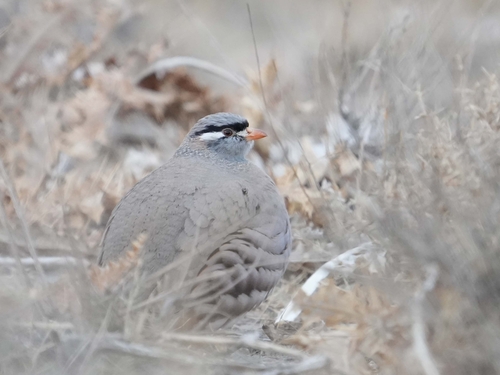
See-see Partridge (Ammoperdix griseogularis) See-see Partridge
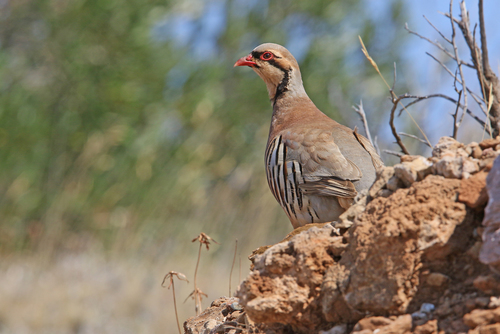
Chukar (Alectoris chukar) Chukar

Media

Loading…

In short

The See-see Partridge and the Chukar can be differentiated primarily by their size and plumage patterns. The Chukar is larger and more robust, while the See-see Partridge is smaller and more delicate. Key plumage differences include the Chukar's bold black band running across its face and throat, contrasting with the See-see Partridge's more subtle facial markings.

Identification tips

1. Size: Look for the Chukar's larger size and more robust build. 2. Facial Markings: Note the Chukar's bold black facial band versus the See-see Partridge's subtle markings. 3. Habitat: Consider the habitat; Chukars prefer rocky, open ranges, whereas See-see Partridges are found in arid, rocky areas. 4. Vocalization: Listen for the Chukar's distinctive call if vocalizations are heard.

Size

The Chukar is larger and more robust than the See-see Partridge.

Plumage

The Chukar has a distinctive black band across its face and throat, while the See-see Partridge has more subtle facial markings with a greyish throat and less pronounced facial patterns.

Behaviour

Both species are ground-dwelling and exhibit similar behaviors, such as foraging on the ground and being wary of predators.

Habitat

The Chukar is often found in rocky, mountainous terrains and open ranges, while the See-see Partridge prefers arid, rocky areas with sparse vegetation.

Voice

Vocalizations are not well-documented for both species, but the Chukar is known for its distinctive 'chuk-chuk-chukar' call.

Submit a better description

Use the same sections as the comparison. Your text is published immediately.

The See-see Partridge and the Chukar can be differentiated primarily by their size and plumage patterns. The Chukar is larger and more robust, while the See-see Partridge is smaller and more delicate. Key plumage differences include the Chukar's bold black band running across its face and throat, contrasting with the See-see Partridge's more subtle facial markings.

1. Size: Look for the Chukar's larger size and more robust build. 2. Facial Markings: Note the Chukar's bold black facial band versus the See-see Partridge's subtle markings. 3. Habitat: Consider the habitat; Chukars prefer rocky, open ranges, whereas See-see Partridges are found in arid, rocky areas. 4. Vocalization: Listen for the Chukar's distinctive call if vocalizations are heard.

The Chukar is larger and more robust than the See-see Partridge.

The Chukar has a distinctive black band across its face and throat, while the See-see Partridge has more subtle facial markings with a greyish throat and less pronounced facial patterns.

Both species are ground-dwelling and exhibit similar behaviors, such as foraging on the ground and being wary of predators.

The Chukar is often found in rocky, mountainous terrains and open ranges, while the See-see Partridge prefers arid, rocky areas with sparse vegetation.

Vocalizations are not well-documented for both species, but the Chukar is known for its distinctive 'chuk-chuk-chukar' call.

Discard your changes?

You have unsaved edits. If you leave now, those changes will be lost.

See-see Partridge · Chukar · My Tricky Birds