Semipalmated Plover vs Murphy's Petrel
Charadrius semipalmatus versus Pterodroma ultima
Play a quiz with Semipalmated Plover and Murphy's Petrel
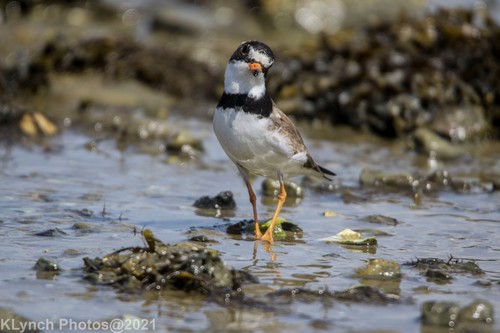
Semipalmated Plover
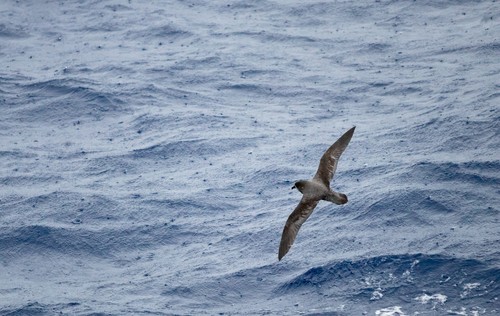
Murphy's Petrel
In short
The Semipalmated Plover and Murphy's Petrel are distinct in appearance and habitat, making them unlikely to be confused in the field. The plover is a small, stocky shorebird with a distinctive single breast band, while the petrel is a larger seabird with long wings adapted for gliding over the ocean.
Identification tips
1. Location: Semipalmated Plovers are found near shorelines and wetlands, while Murphy's Petrels are oceanic. 2. Size and Shape: Note the plover's small size and stocky build versus the petrel's larger size and long wings. 3. Plumage: Look for the plover's single black breast band, absent in the petrel. 4. Behavior: Plovers run and stop frequently on land; petrels glide over the ocean.
Size
The Semipalmated Plover is small and compact, typically around 18-20 cm in length, whereas Murphy's Petrel is larger, about 40 cm long, with a wingspan that can reach up to 95 cm.
Plumage
The Semipalmated Plover has a brown back, white underparts, and a single black breast band. In contrast, Murphy's Petrel is uniformly dark gray with a paler underwing and lacks any breast band.
Behaviour
Semipalmated Plovers are often seen running along shorelines, stopping to peck at the ground, while Murphy's Petrels are usually observed gliding over open ocean waters, rarely seen near land except during breeding.
Habitat
Semipalmated Plovers are found in coastal and inland wetlands during migration and breeding, whereas Murphy's Petrels inhabit open ocean environments, nesting on remote islands in the South Pacific.
Voice
The Semipalmated Plover has a clear, whistled call, often heard during flight. Murphy's Petrel is generally silent at sea but may produce soft calls at breeding colonies.