Semipalmated Plover vs Piping Plover
Charadrius semipalmatus versus Charadrius melodus
Play a quiz with Semipalmated Plover and Piping Plover

Semipalmated Plover
Piping Plover
In short
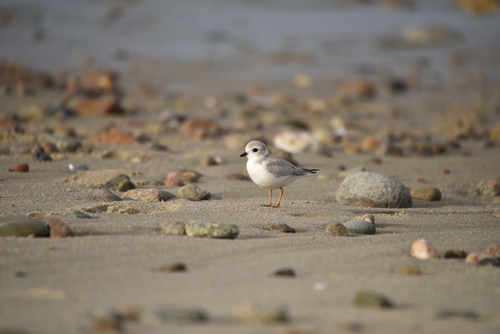
The Semipalmated Plover and Piping Plover are small, similar shorebirds, but can be distinguished by their bill size and plumage patterns. The Semipalmated Plover has a darker, more contrasting face pattern, while the Piping Plover is paler overall with a distinctive, incomplete neck band.
Identification tips
- Bill size and shape: The Semipalmated Plover has a slightly longer, more pointed bill compared to the shorter, stubbier bill of the Piping Plover. 2. Breast band: Look for the bold, complete black breast band of the Semipalmated Plover versus the often incomplete band of the Piping Plover. 3. Face pattern: The Semipalmated Plover has a more pronounced dark face mask. 4. Overall color: The Piping Plover is paler with a sandy tone, especially on the back. 5. Habitat preference: Note the habitat; Piping Plovers are more likely found on open sandy beaches.
Size
Both species are similar in size, but the Piping Plover may appear slightly more compact due to its shorter bill.
Plumage
The Semipalmated Plover has a single, bold black breast band and a dark face mask with a white forehead. The Piping Plover is paler, with a sandy-colored back, a less distinct facial pattern, and often an incomplete or faint breast band.
Behaviour
Both species exhibit similar foraging behaviors, often seen running and stopping to peck at the ground. They can be observed in mixed flocks during migration.
Habitat
Semipalmated Plovers are more versatile, found in a variety of coastal and inland habitats. Piping Plovers prefer open sandy beaches and flats, often in areas with less vegetation.
Voice
The Semipalmated Plover's call is a clear, two-note whistle, while the Piping Plover has a softer, more musical 'peep-lo' call.