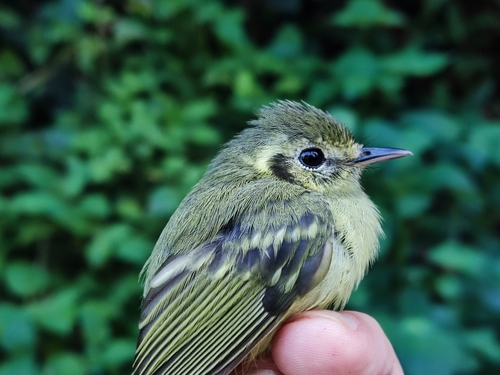
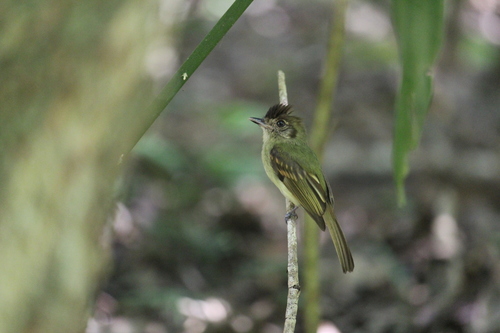
Sepia-capped Flycatcher vs Sao Paulo Bristle-Tyrant
Leptopogon amaurocephalus versus Pogonotriccus paulista
Play a quiz with Sepia-capped Flycatcher and Sao Paulo Bristle-Tyrant
Sepia-capped Flycatcher
Sao Paulo Bristle-Tyrant
In short
The Sepia-capped Flycatcher and Sao Paulo Bristle-Tyrant are both small flycatchers with subtle differences in structure and plumage. The Sepia-capped Flycatcher is known for its distinctive dark cheek patch with a pale fringe and tear-drop, while the Sao Paulo Bristle-Tyrant has less documented plumage details but belongs to a similar genus. Vocalizations and behavior can also aid in identification.
Identification tips
Look for the dark cheek patch with a pale fringe and tear-drop in the Sepia-capped Flycatcher. Observe behavior such as hover-gleaning and wing-lifting. Listen for explosive vocalizations. Sao Paulo Bristle-Tyrant identification may rely more on habitat and subtle differences in behavior.
Size
Both species are small flycatchers, but specific size differences are not well-documented.
Plumage
The Sepia-capped Flycatcher has a dark cheek patch with a pale fringe and tear-drop, a characteristic feature of its genus. The Sao Paulo Bristle-Tyrant lacks detailed plumage descriptions but is likely similar in subtlety.
Behaviour
Sepia-capped Flycatcher is known for hover-gleaning and associating with mixed flocks, often lifting one wing over its back. Sao Paulo Bristle-Tyrant's behavior is less documented but typical of its genus.
Habitat
Sepia-capped Flycatcher ranges from Mexico to northern Argentina, often found in mixed flocks. Sao Paulo Bristle-Tyrant's habitat specifics are less known but likely similar in forested areas.
Voice
Sepia-capped Flycatcher has explosive vocalizations that seem larger than its size. Sao Paulo Bristle-Tyrant's vocalizations are not well-documented.
Sepia-capped Flycatcher · Sao Paulo Bristle-Tyrant · My Tricky Birds