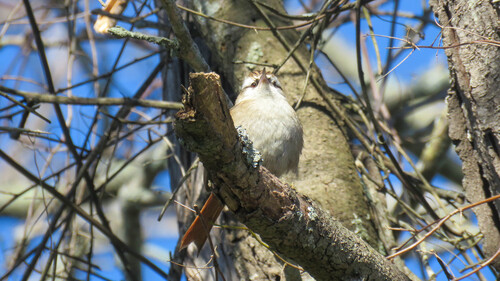
Sharp-billed Canastero vs Stripe-crowned Spinetail
Asthenes pyrrholeuca versus Cranioleuca pyrrhophia
Play a quiz with Sharp-billed Canastero and Stripe-crowned Spinetail

Sharp-billed Canastero
Stripe-crowned Spinetail
In short
The Sharp-billed Canastero and the Stripe-crowned Spinetail can be distinguished by their bill shape and plumage details. The Sharp-billed Canastero has a notably slender bill, while the Stripe-crowned Spinetail features a distinctive stripe on its crown. Both species belong to the same family, but their vocalizations and preferred habitats also differ.
Identification tips
- Bill shape: Look for the slender bill of the Sharp-billed Canastero. 2. Crown stripe: Check for the distinctive crown stripe on the Stripe-crowned Spinetail. 3. Vocalizations: Listen for the trilled notes of the Stripe-crowned Spinetail. 4. Habitat: Consider the habitat; the Stripe-crowned Spinetail prefers denser foliage.
Size
Both species are similar in size, typical of small Furnariids.
Plumage
The Sharp-billed Canastero has a more uniform brown plumage with subtle streaking, whereas the Stripe-crowned Spinetail is characterized by its striking stripe on the crown and slightly more rufous tones on the wings and tail.
Behaviour
Both species are active foragers, but the Stripe-crowned Spinetail often associates with mixed-species flocks, which is less common for the Sharp-billed Canastero.
Habitat
The Sharp-billed Canastero is often found in open, shrubby areas, while the Stripe-crowned Spinetail prefers dense, shrubby trees and is more likely to be found in dry forests.
Voice
The Stripe-crowned Spinetail is known for its loud series of trilled notes, which can help identify its presence. The Sharp-billed Canastero's vocalizations are less well-documented in the sources.
Sharp-billed Canastero · Stripe-crowned Spinetail · My Tricky Birds