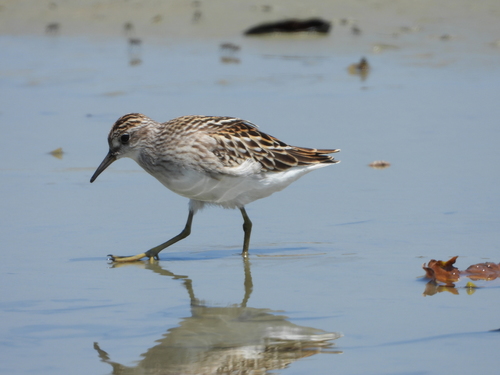
Sharp-tailed Sandpiper vs Long-toed Stint
Calidris acuminata versus Calidris subminuta
Play a quiz with Sharp-tailed Sandpiper and Long-toed Stint
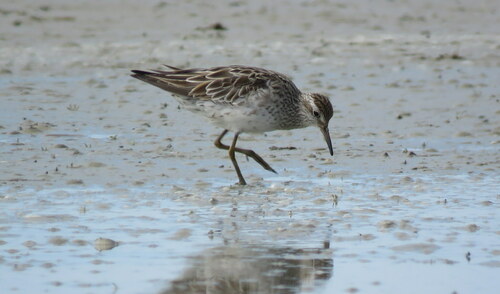
Sharp-tailed Sandpiper
Long-toed Stint
In short
The Sharp-tailed Sandpiper and Long-toed Stint can be distinguished by size and plumage details. Sharp-tailed Sandpipers are generally larger with a more robust build, while Long-toed Stints are smaller and more delicate with distinctive long toes that project beyond the tail in flight.
Identification tips
- Size and Build: Sharp-tailed Sandpipers are larger and more robust; Long-toed Stints are smaller and slimmer.
- Toes in Flight: Long-toed Stints have long toes that project beyond the tail in flight.
- Supercilium and Crown: Look for the prominent whitish supercilium and rufous crown on Long-toed Stints.
- Plumage Details: Note the rufous and pale buff fringes on the upperparts of Long-toed Stints.
- Vocalizations: Listen for the distinctive calls of the Long-toed Stint if possible.
Size
Sharp-tailed Sandpipers are larger and more robust compared to the smaller, slimmer Long-toed Stints.
Plumage
Sharp-tailed Sandpipers have a more uniform brownish plumage with a less distinct supercilium, while Long-toed Stints feature a prominent whitish supercilium, rufous crown, and ear-coverts with dark streaks. The Long-toed Stint's upperparts have dark brown centers with rufous and pale buff fringes.
Voice
Long-toed Stints have a variety of calls, including a trilling 'chee' or 'prrrt', and a soft rolling 'kurrip', which may help in identification if heard.