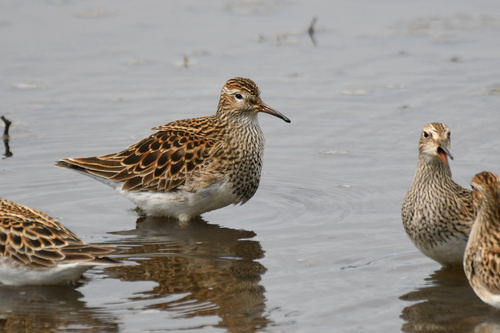
Sharp-tailed Sandpiper vs Pectoral Sandpiper
Calidris acuminata versus Calidris melanotos
Play a quiz with Sharp-tailed Sandpiper and Pectoral Sandpiper

Sharp-tailed Sandpiper
Pectoral Sandpiper
In short
The Sharp-tailed Sandpiper and Pectoral Sandpiper are similar medium-sized shorebirds, but can be distinguished by their plumage and structural differences. The Sharp-tailed Sandpiper typically shows a more rufous cap and less distinct breast streaking compared to the Pectoral Sandpiper, which has a sharply defined breast band.
Identification tips
- Look for the rufous cap and less distinct breast streaking on the Sharp-tailed Sandpiper. 2. Note the sharp breast band of the Pectoral Sandpiper. 3. Consider habitat and range, especially during migration. 4. Listen for the Pectoral Sandpiper's unique hooting calls in breeding areas.
Size
Both species are similar in size, with the Pectoral Sandpiper being slightly larger and bulkier.
Plumage
The Sharp-tailed Sandpiper has a rufous cap and a more uniform, less streaked breast, whereas the Pectoral Sandpiper features a distinct, sharply defined breast band with a contrasting white belly. The Sharp-tailed Sandpiper also tends to have a more buffy overall appearance.
Behaviour
Both species exhibit similar foraging behaviors, probing in mudflats or marshes, but the Pectoral Sandpiper is known for its unique display flights during breeding.
Habitat
While both species can be found in similar wetland habitats during migration, the Pectoral Sandpiper breeds in the Arctic tundra and winters in South America, whereas the Sharp-tailed Sandpiper breeds in Siberia and winters in Australasia.
Voice
The Pectoral Sandpiper is known for its unique series of hollow hoots during the breeding season, a vocalization not typically associated with the Sharp-tailed Sandpiper.
Sharp-tailed Sandpiper · Pectoral Sandpiper · My Tricky Birds