Birdr

Sharp-tailed Sandpiper vs Stilt Sandpiper

Calidris acuminata versus Calidris himantopus

Play a quiz with Sharp-tailed Sandpiper and Stilt Sandpiper
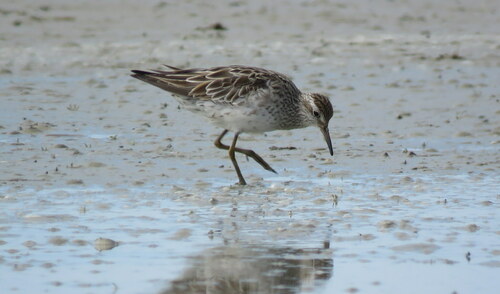
Sharp-tailed Sandpiper (Calidris acuminata) Sharp-tailed Sandpiper
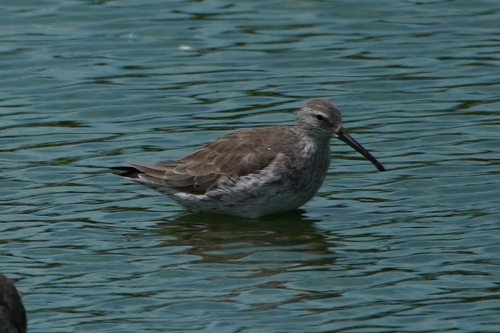
Stilt Sandpiper (Calidris himantopus) Stilt Sandpiper

Media

Loading…

In short

The Sharp-tailed Sandpiper and Stilt Sandpiper can be distinguished by their habitat preferences and structural differences. Sharp-tailed Sandpipers have a more rounded head and shorter bill, while Stilt Sandpipers have a longer, slightly decurved bill and prefer foraging in deeper water.

Identification tips

Size

Both species are similar in size, but the Stilt Sandpiper appears slightly taller due to its longer legs.

Plumage

Sharp-tailed Sandpipers have a chestnut cap and a more uniform rufous wash on the breast during breeding season, while Stilt Sandpipers have a more streaked breast and a less distinct cap.

Behaviour

Sharp-tailed Sandpipers are often seen foraging on mudflats, while Stilt Sandpipers forage in deeper water, often belly-deep.

Habitat

Sharp-tailed Sandpipers prefer mudflats and grassy edges of wetlands, whereas Stilt Sandpipers are more likely found in pools or lagoons.

Submit a better description

Use the same sections as the comparison. Your text is published immediately.

The Sharp-tailed Sandpiper and Stilt Sandpiper can be distinguished by their habitat preferences and structural differences. Sharp-tailed Sandpipers have a more rounded head and shorter bill, while Stilt Sandpipers have a longer, slightly decurved bill and prefer foraging in deeper water.

  • Bill shape: Sharp-tailed Sandpipers have a straight, shorter bill; Stilt Sandpipers have a longer, slightly decurved bill.
  • Head and cap: Look for the chestnut cap on Sharp-tailed Sandpipers, especially in breeding plumage.
  • Leg length: Stilt Sandpipers have noticeably longer legs, giving them a taller appearance.
  • Foraging behavior: Note the depth of water they forage in; Stilt Sandpipers often feed in deeper water.
  • Habitat preference: Sharp-tailed Sandpipers are more likely on mudflats, while Stilt Sandpipers prefer deeper pools or lagoons.

Both species are similar in size, but the Stilt Sandpiper appears slightly taller due to its longer legs.

Sharp-tailed Sandpipers have a chestnut cap and a more uniform rufous wash on the breast during breeding season, while Stilt Sandpipers have a more streaked breast and a less distinct cap.

Sharp-tailed Sandpipers are often seen foraging on mudflats, while Stilt Sandpipers forage in deeper water, often belly-deep.

Sharp-tailed Sandpipers prefer mudflats and grassy edges of wetlands, whereas Stilt Sandpipers are more likely found in pools or lagoons.

Discard your changes?

You have unsaved edits. If you leave now, those changes will be lost.

Sharp-tailed Sandpiper · Stilt Sandpiper · My Tricky Birds