Birdr

Sharpbill vs White-throated Spadebill

Oxyruncus cristatus versus Platyrinchus mystaceus

Play a quiz with Sharpbill and White-throated Spadebill
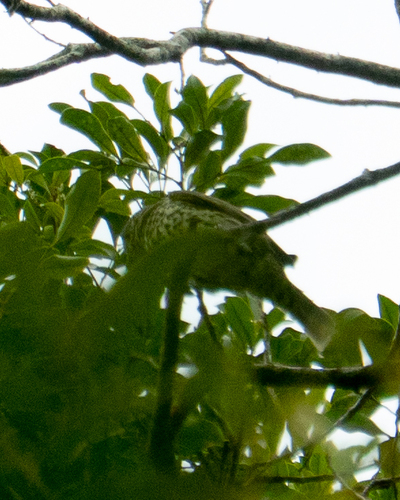
Sharpbill (Oxyruncus cristatus) Sharpbill
White-throated Spadebill (Platyrinchus mystaceus) White-throated Spadebill

Media

Loading…

In short

The Sharpbill and White-throated Spadebill can be distinguished by their bill shape and plumage patterns. The Sharpbill has a distinctive hooked bill and a more uniform greenish body, while the White-throated Spadebill features a broad, flat bill and a striking white throat patch.

Identification tips

  1. Look for the Sharpbill's hooked bill and small crest. 2. Note the White-throated Spadebill's flat bill and white throat. 3. Observe behavior: Sharpbill in canopy, Spadebill in undergrowth. 4. Listen for vocal differences: Sharpbill's high-pitched notes vs. Spadebill's 'pip'.

Size

The Sharpbill is slightly larger than the White-throated Spadebill.

Plumage

Sharpbill has a greenish body with subtle streaking and a small crest, whereas the White-throated Spadebill is more olive-brown with a prominent white throat and a yellowish belly.

Behaviour

Sharpbill is often seen foraging higher in the canopy, while the White-throated Spadebill tends to stay in the undergrowth.

Habitat

Both species inhabit humid forests, but the Sharpbill is more often found in the mid to upper canopy, whereas the White-throated Spadebill prefers the undergrowth and lower levels.

Voice

The Sharpbill's song is a series of high-pitched notes, while the White-throated Spadebill's call is a short, sharp 'pip'.

Submit a better description

Use the same sections as the comparison. Your text is published immediately.

The Sharpbill and White-throated Spadebill can be distinguished by their bill shape and plumage patterns. The Sharpbill has a distinctive hooked bill and a more uniform greenish body, while the White-throated Spadebill features a broad, flat bill and a striking white throat patch.

  1. Look for the Sharpbill's hooked bill and small crest. 2. Note the White-throated Spadebill's flat bill and white throat. 3. Observe behavior: Sharpbill in canopy, Spadebill in undergrowth. 4. Listen for vocal differences: Sharpbill's high-pitched notes vs. Spadebill's 'pip'.

The Sharpbill is slightly larger than the White-throated Spadebill.

Sharpbill has a greenish body with subtle streaking and a small crest, whereas the White-throated Spadebill is more olive-brown with a prominent white throat and a yellowish belly.

Sharpbill is often seen foraging higher in the canopy, while the White-throated Spadebill tends to stay in the undergrowth.

Both species inhabit humid forests, but the Sharpbill is more often found in the mid to upper canopy, whereas the White-throated Spadebill prefers the undergrowth and lower levels.

The Sharpbill's song is a series of high-pitched notes, while the White-throated Spadebill's call is a short, sharp 'pip'.

Discard your changes?

You have unsaved edits. If you leave now, those changes will be lost.

Sharpbill · White-throated Spadebill · My Tricky Birds