Birdr

Shikra vs Chinese Sparrowhawk

Tachyspiza badia versus Tachyspiza soloensis

Play a quiz with Shikra and Chinese Sparrowhawk
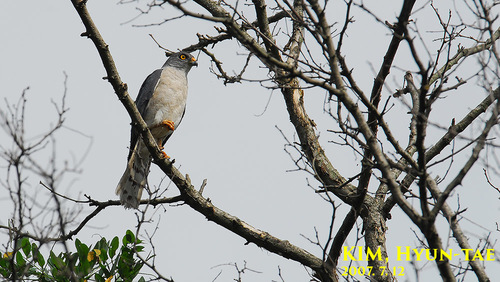
Shikra (Tachyspiza badia) Shikra
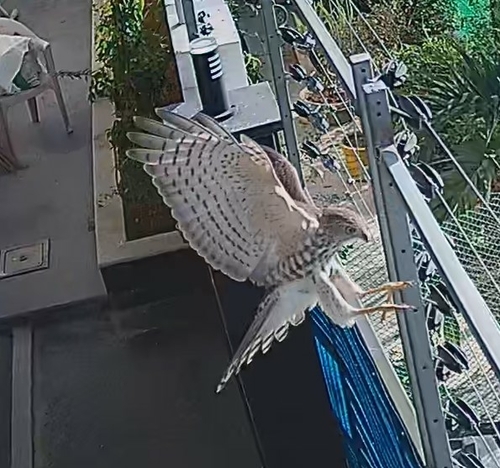
Chinese Sparrowhawk (Tachyspiza soloensis) Chinese Sparrowhawk

Media

Loading…

In short

The Shikra and Chinese Sparrowhawk are both small raptors, but they can be distinguished by their structure and plumage. The Shikra has a more robust build with a shorter tail, while the Chinese Sparrowhawk is more slender with a longer tail. Plumage differences include the Shikra's more uniform grey upperparts compared to the Chinese Sparrowhawk's bluish-grey tones.

Identification tips

1. Structure: Note the Shikra's shorter tail and more robust build compared to the slender, long-tailed Chinese Sparrowhawk. 2. Plumage: Look for the Shikra's uniform grey upperparts versus the Chinese Sparrowhawk's bluish-grey tones. 3. Habitat: Consider the habitat, as Shikras are more adaptable, while Chinese Sparrowhawks favor forested areas. 4. Season and Location: Be aware of the range and migration patterns, as these can aid in identification.

Size

The Shikra is slightly more robust, whereas the Chinese Sparrowhawk appears more slender and elongated.

Plumage

Shikras have uniform grey upperparts and a more consistent barring on the underparts. In contrast, Chinese Sparrowhawks display bluish-grey upperparts and may have less pronounced barring.

Behaviour

Both species exhibit similar hunting behaviors, often seen soaring or perched quietly in search of prey.

Habitat

Shikras are more adaptable, found in a variety of wooded and open habitats, while Chinese Sparrowhawks prefer forested areas, especially during migration.

Voice

Vocalizations are not a primary distinguishing feature, as both species have similar calls, though the Shikra's call may be slightly more piercing.

Submit a better description

Use the same sections as the comparison. Your text is published immediately.

The Shikra and Chinese Sparrowhawk are both small raptors, but they can be distinguished by their structure and plumage. The Shikra has a more robust build with a shorter tail, while the Chinese Sparrowhawk is more slender with a longer tail. Plumage differences include the Shikra's more uniform grey upperparts compared to the Chinese Sparrowhawk's bluish-grey tones.

1. Structure: Note the Shikra's shorter tail and more robust build compared to the slender, long-tailed Chinese Sparrowhawk. 2. Plumage: Look for the Shikra's uniform grey upperparts versus the Chinese Sparrowhawk's bluish-grey tones. 3. Habitat: Consider the habitat, as Shikras are more adaptable, while Chinese Sparrowhawks favor forested areas. 4. Season and Location: Be aware of the range and migration patterns, as these can aid in identification.

The Shikra is slightly more robust, whereas the Chinese Sparrowhawk appears more slender and elongated.

Shikras have uniform grey upperparts and a more consistent barring on the underparts. In contrast, Chinese Sparrowhawks display bluish-grey upperparts and may have less pronounced barring.

Both species exhibit similar hunting behaviors, often seen soaring or perched quietly in search of prey.

Shikras are more adaptable, found in a variety of wooded and open habitats, while Chinese Sparrowhawks prefer forested areas, especially during migration.

Vocalizations are not a primary distinguishing feature, as both species have similar calls, though the Shikra's call may be slightly more piercing.

Discard your changes?

You have unsaved edits. If you leave now, those changes will be lost.

Shikra · Chinese Sparrowhawk · My Tricky Birds