Birdr

Shikra vs Eurasian Sparrowhawk

Tachyspiza badia versus Accipiter nisus

Play a quiz with Shikra and Eurasian Sparrowhawk
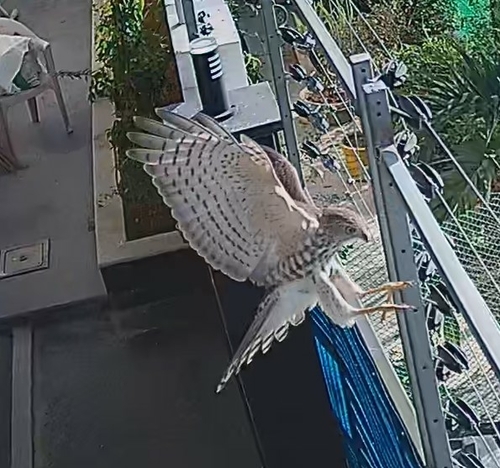
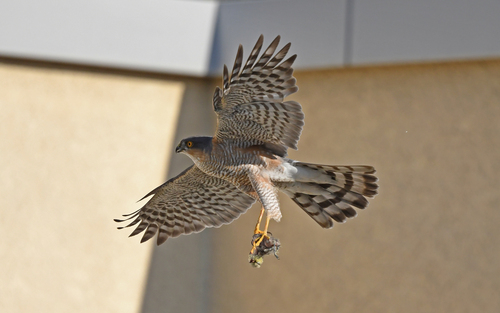
Shikra (Tachyspiza badia) Shikra
Eurasian Sparrowhawk (Accipiter nisus) Eurasian Sparrowhawk

Media

Loading…

In short

The Shikra and Eurasian Sparrowhawk are both small raptors, but they differ in structure and plumage. The Shikra has a more rounded tail and lacks the prominent supercilium seen in the female Eurasian Sparrowhawk. Plumage differences are subtle, so focus on structure and behavior.

Identification tips

  1. Look for the rounded tail of the Shikra compared to the more squared tail of the Eurasian Sparrowhawk. 2. Note the absence of a prominent supercilium in the Shikra, which is present in female Eurasian Sparrowhawks. 3. Observe habitat preference: Shikras are more likely in open areas, while Eurasian Sparrowhawks prefer wooded habitats. 4. In males, check for the rufous wash on the cheeks and breast of the Eurasian Sparrowhawk.

Size

Both species are similar in size, but the Eurasian Sparrowhawk can appear slightly larger, especially the females.

Plumage

The Shikra generally has a more uniform gray or brown plumage without the distinct supercilium of the female Eurasian Sparrowhawk. The male Eurasian Sparrowhawk has slate-blue upperparts with a rufous wash on the cheeks and breast, while the Shikra's plumage is more uniformly colored.

Behaviour

Both species are agile fliers, but the Shikra is often seen in more open habitats compared to the Eurasian Sparrowhawk, which prefers wooded areas.

Habitat

The Shikra is found in a variety of habitats including open woodlands and savannas, while the Eurasian Sparrowhawk is more associated with forests and wooded areas across its range.

Voice

Vocalizations are not a primary distinguishing feature in the field for these species.

Submit a better description

Use the same sections as the comparison. Your text is published immediately.

The Shikra and Eurasian Sparrowhawk are both small raptors, but they differ in structure and plumage. The Shikra has a more rounded tail and lacks the prominent supercilium seen in the female Eurasian Sparrowhawk. Plumage differences are subtle, so focus on structure and behavior.

  1. Look for the rounded tail of the Shikra compared to the more squared tail of the Eurasian Sparrowhawk. 2. Note the absence of a prominent supercilium in the Shikra, which is present in female Eurasian Sparrowhawks. 3. Observe habitat preference: Shikras are more likely in open areas, while Eurasian Sparrowhawks prefer wooded habitats. 4. In males, check for the rufous wash on the cheeks and breast of the Eurasian Sparrowhawk.

Both species are similar in size, but the Eurasian Sparrowhawk can appear slightly larger, especially the females.

The Shikra generally has a more uniform gray or brown plumage without the distinct supercilium of the female Eurasian Sparrowhawk. The male Eurasian Sparrowhawk has slate-blue upperparts with a rufous wash on the cheeks and breast, while the Shikra's plumage is more uniformly colored.

Both species are agile fliers, but the Shikra is often seen in more open habitats compared to the Eurasian Sparrowhawk, which prefers wooded areas.

The Shikra is found in a variety of habitats including open woodlands and savannas, while the Eurasian Sparrowhawk is more associated with forests and wooded areas across its range.

Vocalizations are not a primary distinguishing feature in the field for these species.

Discard your changes?

You have unsaved edits. If you leave now, those changes will be lost.

Shikra · Eurasian Sparrowhawk · My Tricky Birds