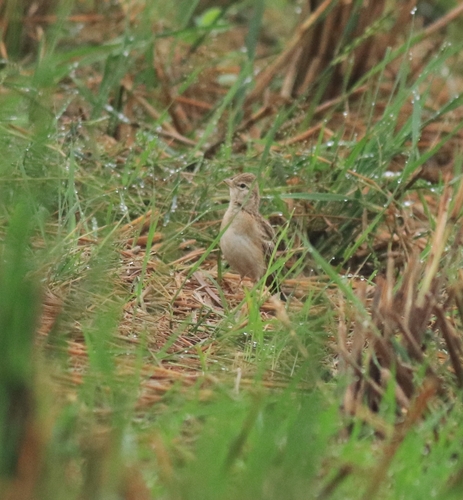
Shore Lark vs Mongolian Short-toed Lark
Eremophila alpestris versus Calandrella dukhunensis
Play a quiz with Shore Lark and Mongolian Short-toed Lark
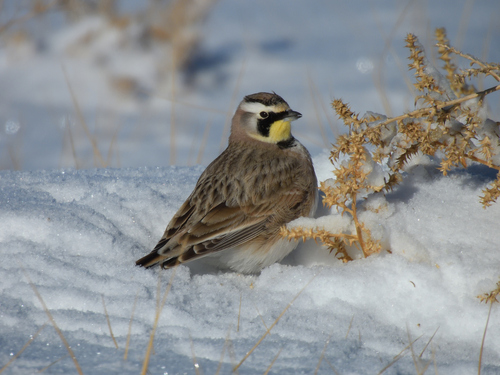
Shore Lark
Mongolian Short-toed Lark
In short
The Shore Lark (Eremophila alpestris) and the Mongolian Short-toed Lark (Calandrella dukhunensis) can be distinguished by their plumage and habitat preferences. The Shore Lark is notable for its distinctive facial markings and black 'horns', while the Mongolian Short-toed Lark is more uniformly colored and found in steppes. Vocalizations differ, but are less reliable in the field.
Identification tips
1. Facial Markings: Look for the Shore Lark's distinct black and yellow face pattern and 'horns'. 2. Habitat: Note the habitat; Shore Larks are more widespread, while Mongolian Short-toed Larks prefer steppes. 3. Plumage: Shore Larks have more contrasting plumage; Mongolian Short-toed Larks are more uniformly brown. 4. Size and Shape: Shore Larks are slightly larger and more robust. 5. Vocalizations: If heard, note the differences in song structure, though this may be challenging in the field.
Size
Both species are small larks, but the Shore Lark is slightly larger and more robust compared to the more compact Mongolian Short-toed Lark.
Plumage
The Shore Lark has a striking black and yellow face pattern with black 'horns' on the head, especially in males. The Mongolian Short-toed Lark is more uniformly brown with less pronounced facial markings, lacking the distinctive 'horns'.
Behaviour
Both species exhibit typical lark behavior, such as ground foraging and short, undulating flights. The Shore Lark may be more often seen in open, barren areas compared to the Mongolian Short-toed Lark.
Habitat
The Shore Lark is found in a wide range of open habitats from the Arctic to North Africa, while the Mongolian Short-toed Lark is primarily associated with the steppes of Mongolia and neighboring regions.
Voice
The Shore Lark has a varied song with tinkling notes, while the Mongolian Short-toed Lark's song and calls differ markedly from those of the Greater Short-toed Lark, but specific differences are less well-documented.