Birdr

Shore Lark vs Woodlark

Eremophila alpestris versus Lullula arborea

Play a quiz with Shore Lark and Woodlark
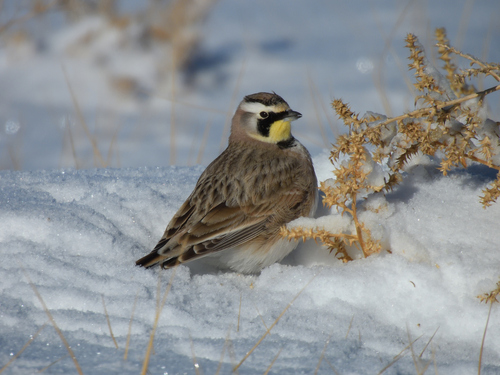
Shore Lark (Eremophila alpestris) Shore Lark
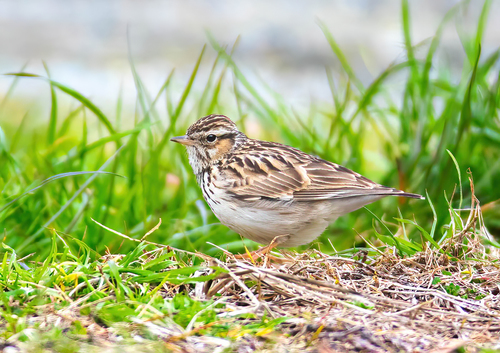
Woodlark (Lullula arborea) Woodlark

Media

Loading…

In short

The Shore Lark (Eremophila alpestris) and Woodlark (Lullula arborea) can be distinguished by their plumage patterns and habitat preferences. Shore Larks have distinct facial markings and are often found in open, barren areas, while Woodlarks have a more uniform appearance and prefer wooded or semi-open habitats.

Identification tips

Size

Both species are similar in size, but the Shore Lark is slightly larger and more robust than the more delicate Woodlark.

Plumage

Shore Larks have a black mask and breast band with a yellow face, while Woodlarks have a more uniform brown plumage with a subtle supercilium and streaked crown.

Behaviour

Shore Larks are often seen foraging on the ground in open areas, whereas Woodlarks may be observed singing from perches or in flight.

Habitat

Shore Larks inhabit open, barren landscapes such as tundra and coastal areas, while Woodlarks prefer wooded or semi-open habitats like heathlands and clearings.

Voice

Woodlarks are known for their melodious, fluting song, often delivered in flight, whereas Shore Larks have a simpler, less musical call.

Submit a better description

Use the same sections as the comparison. Your text is published immediately.

The Shore Lark (Eremophila alpestris) and Woodlark (Lullula arborea) can be distinguished by their plumage patterns and habitat preferences. Shore Larks have distinct facial markings and are often found in open, barren areas, while Woodlarks have a more uniform appearance and prefer wooded or semi-open habitats.

  • Look for the black facial markings and yellow face of the Shore Lark, especially in open habitats.
  • Note the uniform brown plumage and streaked crown of the Woodlark in wooded or semi-open areas.
  • Listen for the melodious song of the Woodlark, often sung in flight, compared to the simpler calls of the Shore Lark.
  • Consider habitat: Shore Larks prefer open, barren areas, while Woodlarks are found in more vegetated environments.

Both species are similar in size, but the Shore Lark is slightly larger and more robust than the more delicate Woodlark.

Shore Larks have a black mask and breast band with a yellow face, while Woodlarks have a more uniform brown plumage with a subtle supercilium and streaked crown.

Shore Larks are often seen foraging on the ground in open areas, whereas Woodlarks may be observed singing from perches or in flight.

Shore Larks inhabit open, barren landscapes such as tundra and coastal areas, while Woodlarks prefer wooded or semi-open habitats like heathlands and clearings.

Woodlarks are known for their melodious, fluting song, often delivered in flight, whereas Shore Larks have a simpler, less musical call.

Discard your changes?

You have unsaved edits. If you leave now, those changes will be lost.

Shore Lark · Woodlark · My Tricky Birds