Short-eared Owl vs Common Hoopoe
Asio flammeus versus Upupa epops
Play a quiz with Short-eared Owl and Common Hoopoe
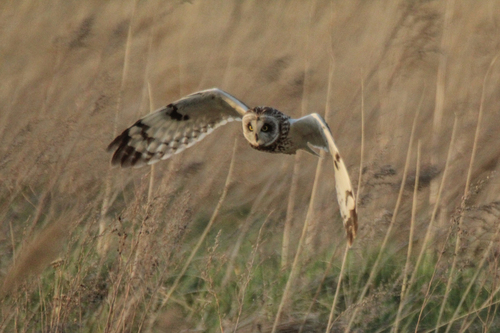
Short-eared Owl
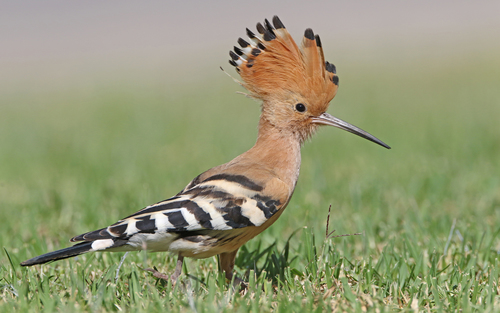
Common Hoopoe
In short
The Short-eared Owl and Common Hoopoe are easily distinguished by their overall appearance and habitat preferences. The owl is a nocturnal bird of prey with a round face and mottled brown plumage, while the hoopoe is a diurnal bird with striking black and white wing patterns and a prominent crest.
Identification tips
- Look for the owl's round face and lack of crest versus the hoopoe's long crest. 2. Note the owl's mottled brown plumage compared to the hoopoe's orange-brown body with black and white wings. 3. Observe behavior: owls fly low over fields at dusk, while hoopoes are active during the day, probing the ground. 4. Listen for vocalizations: the owl's calls are varied, while the hoopoe's call is a clear 'hoo-hoo-hoo'.
Size
The Short-eared Owl is larger and bulkier, with a wingspan of about 85-110 cm, whereas the Common Hoopoe is smaller and more slender, with a wingspan of about 44-48 cm.
Plumage
Short-eared Owls have mottled brown plumage with a pale face and yellow eyes, lacking any prominent crest. In contrast, Common Hoopoes have a distinctive orange-brown body with a long, black-tipped crest and striking black and white barred wings and tail.
Behaviour
Short-eared Owls are primarily crepuscular or nocturnal hunters, often seen flying low over open fields. Common Hoopoes are diurnal and often seen probing the ground with their long bills in search of insects.
Habitat
Short-eared Owls prefer open habitats like grasslands, marshes, and tundra. Common Hoopoes are found in open woodlands, savannas, and gardens, often in warmer climates.
Voice
Short-eared Owls have a variety of calls, including a barking 'kee-yow' and a hooting sound. Common Hoopoes are known for their distinctive 'hoo-hoo-hoo' call, which is quite different from the owl's vocalizations.