Birdr

Short-tailed Hawk vs Ferruginous Hawk

Buteo brachyurus versus Buteo regalis

Play a quiz with Short-tailed Hawk and Ferruginous Hawk
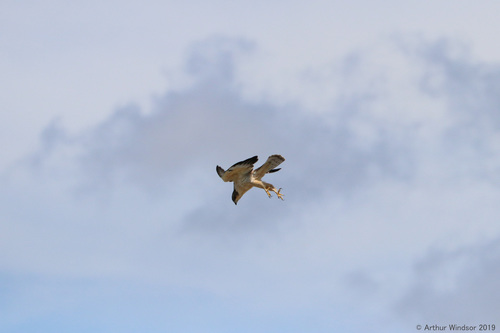
Short-tailed Hawk (Buteo brachyurus) Short-tailed Hawk
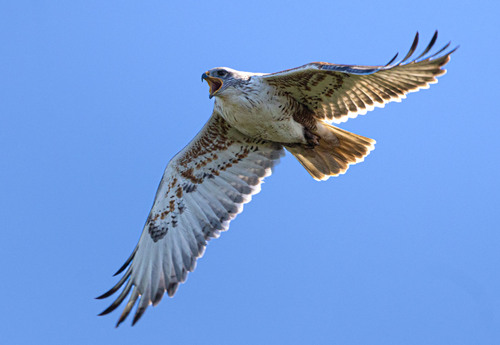
Ferruginous Hawk (Buteo regalis) Ferruginous Hawk

Media

Loading…

In short

The most reliable way to separate Short-tailed Hawk from Ferruginous Hawk is by overall structure and wing/tail proportions in flight: Ferruginous Hawk is much larger, with long, broad wings and a relatively long tail, while Short-tailed Hawk is compact with shorter, more rounded wings and a notably short tail. In flight, Ferruginous Hawk shows prominent pale 'windows' in the primaries, a rufous rump, and a whitish underwing with rufous patagial markings, while Short-tailed Hawk lacks these features and appears plainer below. Perched, Ferruginous Hawk is massive and long-legged with feathered legs down to the toes, while Short-tailed Hawk is much smaller and more easily concealed. These differences are consistent across ages and morphs, though both species have pale and dark morphs that can cause confusion at a distance.

Identification tips

  1. Size and Structure: Ferruginous Hawk is much larger and bulkier, with long, broad wings and a long tail. Short-tailed Hawk is compact, with shorter, rounded wings and a notably short tail. Use this as a first check, especially in flight.
  2. Leg Feathering: Ferruginous Hawk has feathered legs all the way to the toes (like a golden eagle), visible when perched or in good flight views. Short-tailed Hawk has bare lower legs.
  3. Wing Pattern in Flight: Ferruginous Hawk shows two pale 'windows' on the upperwing (inner primaries) and a rufous rump from above. These are absent in Short-tailed Hawk.
  4. Underwing Pattern: Ferruginous Hawk has whitish underwings with rufous patagial markings and dark 'comma' marks at the wrists. Short-tailed Hawk's underwings are plainer, with less contrast and no rufous or 'comma' marks.
  5. Tail Length and Pattern: Ferruginous Hawk has a long, broad tail, often with a pale base and faint barring. Short-tailed Hawk's tail is short and less distinctly marked.
  6. Perched Appearance: Ferruginous Hawk is massive, with a white head and body, rusty upperparts, and a dark eye streak. Short-tailed Hawk is smaller, more compact, and often hidden in foliage.
  7. Plumage Morphs: Both species have pale and dark morphs, but Ferruginous dark morphs are brownish (not slaty like rough-legged), and still show the structural features above. Short-tailed Hawk dark morphs are uniformly dark below and above, lacking rufous or pale windows.
  8. Habitat: Ferruginous Hawk is found in open grasslands and prairies, rarely near woods. Short-tailed Hawk is associated with forest edges and subtropical/tropical woodlands.
  9. Behavior: Ferruginous Hawk often perches in the open or on the ground, soars with a dihedral, and hunts mammals. Short-tailed Hawk soars high, kites, and hunts birds, rarely perching in the open.
  10. Bill and Feet: Ferruginous Hawk has a massive bill and the largest feet of any Buteo, visible in close perched views. Short-tailed Hawk's bill and feet are much smaller and finer.
  11. Flight Jizz: Ferruginous Hawk is slow-flapping, powerful, and eagle-like in flight. Short-tailed Hawk is more agile, with quicker wingbeats and higher, more buoyant soaring.
  12. Local Abundance: In the US, Ferruginous Hawk is widespread in the west; Short-tailed Hawk is very local and rare, mainly in Florida and parts of the Southwest.
  13. Age Differences: There is no evidence that juvenile Short-tailed Hawks show any Ferruginous-like wing patterns. Ferruginous juveniles and adults are similar in flight marks.
  14. Pitfalls: Dark morphs of either species can be confusing at a distance, but check for size, structure, and the presence/absence of pale wing panels and rufous tones.
  15. Voice: Not diagnostic between these two; both are generally silent and not separated by call in the field.

Size

Ferruginous Hawk is dramatically larger and bulkier than Short-tailed Hawk. The Ferruginous has a wing chord of 415–477 mm and a tail of 224–252 mm, with huge, robust feet and a large bill. Short-tailed Hawk is much smaller, with a shorter tail and more compact build. In the field, Ferruginous Hawk appears eagle-like, while Short-tailed Hawk is closer to a small Buteo or even a large Accipiter in size and shape. This size difference is obvious when seen together, but can be harder to judge at a distance or in poor light.

Plumage

Juvenile and adult Ferruginous Hawks, regardless of morph, show a distinctive combination of pale underwings with rufous patagial markings, dark 'comma' marks at the wrists, and two pale 'windows' on the upperwing (inner primaries) in flight. The rufous rump is also a key feature from above. Perched, Ferruginous Hawks have a white breast and belly with rusty upperparts and a white head with a dark eye streak. Short-tailed Hawk, in both pale and dark morphs, lacks the rufous tones and pale windows; pale morphs are mostly white below with dark flight feathers, while dark morphs are uniformly dark. The tail of Short-tailed Hawk is shorter and less prominently marked than Ferruginous. Leg feathering is another difference: Ferruginous Hawk's legs are feathered down to the toes, while Short-tailed Hawk's are not. These marks are reliable for all ages; there is no evidence of age-specific upperwing patterns in Short-tailed Hawk that could be confused with Ferruginous.

Behaviour

Short-tailed Hawk is often seen soaring high or 'kiting' with stationary wings, usually hunting birds by surprise attacks from above. It is secretive when perched, often hidden in dense canopy. Ferruginous Hawk, in contrast, soars with a dihedral wing posture, perches in open country, and is much more likely to be seen on exposed perches or on the ground. Its hunting is focused on mammals, often from a perch or low flight. The overall impression (jizz) is of a large, powerful, slow-flapping raptor for Ferruginous, versus a smaller, more agile, and often higher-soaring bird for Short-tailed.

Habitat

Ferruginous Hawk is a bird of open country: grasslands, prairies, and deserts, where it hunts ground mammals. Short-tailed Hawk prefers wooded edges, forest borders, and subtropical/tropical habitats, especially near forest openings. In North America, Short-tailed is rare and local (mainly Florida and Arizona), while Ferruginous is widespread in the western US and Canada. Habitat context is a strong clue: Ferruginous is almost never in dense woodland, while Short-tailed avoids open plains.

Submit a better description

Use the same sections as the comparison. Your text is published immediately.

The most reliable way to separate Short-tailed Hawk from Ferruginous Hawk is by overall structure and wing/tail proportions in flight: Ferruginous Hawk is much larger, with long, broad wings and a relatively long tail, while Short-tailed Hawk is compact with shorter, more rounded wings and a notably short tail. In flight, Ferruginous Hawk shows prominent pale 'windows' in the primaries, a rufous rump, and a whitish underwing with rufous patagial markings, while Short-tailed Hawk lacks these features and appears plainer below. Perched, Ferruginous Hawk is massive and long-legged with feathered legs down to the toes, while Short-tailed Hawk is much smaller and more easily concealed. These differences are consistent across ages and morphs, though both species have pale and dark morphs that can cause confusion at a distance.

  1. Size and Structure: Ferruginous Hawk is much larger and bulkier, with long, broad wings and a long tail. Short-tailed Hawk is compact, with shorter, rounded wings and a notably short tail. Use this as a first check, especially in flight.
  2. Leg Feathering: Ferruginous Hawk has feathered legs all the way to the toes (like a golden eagle), visible when perched or in good flight views. Short-tailed Hawk has bare lower legs.
  3. Wing Pattern in Flight: Ferruginous Hawk shows two pale 'windows' on the upperwing (inner primaries) and a rufous rump from above. These are absent in Short-tailed Hawk.
  4. Underwing Pattern: Ferruginous Hawk has whitish underwings with rufous patagial markings and dark 'comma' marks at the wrists. Short-tailed Hawk's underwings are plainer, with less contrast and no rufous or 'comma' marks.
  5. Tail Length and Pattern: Ferruginous Hawk has a long, broad tail, often with a pale base and faint barring. Short-tailed Hawk's tail is short and less distinctly marked.
  6. Perched Appearance: Ferruginous Hawk is massive, with a white head and body, rusty upperparts, and a dark eye streak. Short-tailed Hawk is smaller, more compact, and often hidden in foliage.
  7. Plumage Morphs: Both species have pale and dark morphs, but Ferruginous dark morphs are brownish (not slaty like rough-legged), and still show the structural features above. Short-tailed Hawk dark morphs are uniformly dark below and above, lacking rufous or pale windows.
  8. Habitat: Ferruginous Hawk is found in open grasslands and prairies, rarely near woods. Short-tailed Hawk is associated with forest edges and subtropical/tropical woodlands.
  9. Behavior: Ferruginous Hawk often perches in the open or on the ground, soars with a dihedral, and hunts mammals. Short-tailed Hawk soars high, kites, and hunts birds, rarely perching in the open.
  10. Bill and Feet: Ferruginous Hawk has a massive bill and the largest feet of any Buteo, visible in close perched views. Short-tailed Hawk's bill and feet are much smaller and finer.
  11. Flight Jizz: Ferruginous Hawk is slow-flapping, powerful, and eagle-like in flight. Short-tailed Hawk is more agile, with quicker wingbeats and higher, more buoyant soaring.
  12. Local Abundance: In the US, Ferruginous Hawk is widespread in the west; Short-tailed Hawk is very local and rare, mainly in Florida and parts of the Southwest.
  13. Age Differences: There is no evidence that juvenile Short-tailed Hawks show any Ferruginous-like wing patterns. Ferruginous juveniles and adults are similar in flight marks.
  14. Pitfalls: Dark morphs of either species can be confusing at a distance, but check for size, structure, and the presence/absence of pale wing panels and rufous tones.
  15. Voice: Not diagnostic between these two; both are generally silent and not separated by call in the field.

Ferruginous Hawk is dramatically larger and bulkier than Short-tailed Hawk. The Ferruginous has a wing chord of 415–477 mm and a tail of 224–252 mm, with huge, robust feet and a large bill. Short-tailed Hawk is much smaller, with a shorter tail and more compact build. In the field, Ferruginous Hawk appears eagle-like, while Short-tailed Hawk is closer to a small Buteo or even a large Accipiter in size and shape. This size difference is obvious when seen together, but can be harder to judge at a distance or in poor light.

Juvenile and adult Ferruginous Hawks, regardless of morph, show a distinctive combination of pale underwings with rufous patagial markings, dark 'comma' marks at the wrists, and two pale 'windows' on the upperwing (inner primaries) in flight. The rufous rump is also a key feature from above. Perched, Ferruginous Hawks have a white breast and belly with rusty upperparts and a white head with a dark eye streak. Short-tailed Hawk, in both pale and dark morphs, lacks the rufous tones and pale windows; pale morphs are mostly white below with dark flight feathers, while dark morphs are uniformly dark. The tail of Short-tailed Hawk is shorter and less prominently marked than Ferruginous. Leg feathering is another difference: Ferruginous Hawk's legs are feathered down to the toes, while Short-tailed Hawk's are not. These marks are reliable for all ages; there is no evidence of age-specific upperwing patterns in Short-tailed Hawk that could be confused with Ferruginous.

Short-tailed Hawk is often seen soaring high or 'kiting' with stationary wings, usually hunting birds by surprise attacks from above. It is secretive when perched, often hidden in dense canopy. Ferruginous Hawk, in contrast, soars with a dihedral wing posture, perches in open country, and is much more likely to be seen on exposed perches or on the ground. Its hunting is focused on mammals, often from a perch or low flight. The overall impression (jizz) is of a large, powerful, slow-flapping raptor for Ferruginous, versus a smaller, more agile, and often higher-soaring bird for Short-tailed.

Ferruginous Hawk is a bird of open country: grasslands, prairies, and deserts, where it hunts ground mammals. Short-tailed Hawk prefers wooded edges, forest borders, and subtropical/tropical habitats, especially near forest openings. In North America, Short-tailed is rare and local (mainly Florida and Arizona), while Ferruginous is widespread in the western US and Canada. Habitat context is a strong clue: Ferruginous is almost never in dense woodland, while Short-tailed avoids open plains.

Discard your changes?

You have unsaved edits. If you leave now, those changes will be lost.

Short-tailed Hawk · Ferruginous Hawk · My Tricky Birds