
Birdr

Short-toed Treecreeper vs Common Starling

Certhia brachydactyla versus Sturnus vulgaris

Play a quiz with Short-toed Treecreeper and Common Starling
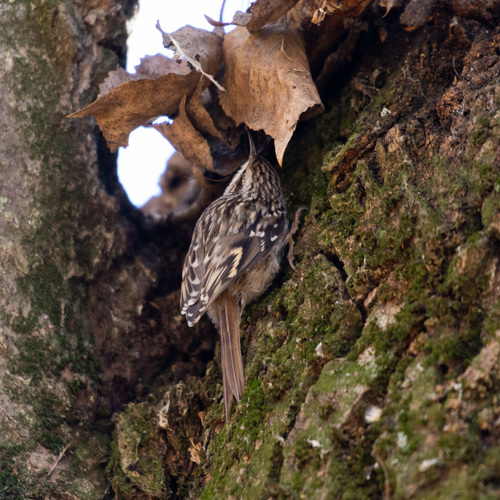
Short-toed Treecreeper (Certhia brachydactyla) Short-toed Treecreeper
Common Starling (Sturnus vulgaris) Common Starling

Media

Loading…

In short

The Short-toed Treecreeper and the Common Starling are easily distinguished by their size and behavior. The treecreeper is a small, slender bird that climbs tree trunks, while the starling is larger, often seen in flocks, and walks on the ground. Their plumage and vocalizations also differ significantly.

Identification tips

  1. Size and Shape: Treecreepers are small and slender, while starlings are larger and stockier. 2. Behavior: Look for treecreepers climbing tree trunks; starlings are often on the ground or in flocks. 3. Plumage: Treecreepers have streaked brown and white plumage; starlings have glossy black with iridescence. 4. Vocalization: Listen for the treecreeper's high-pitched calls versus the starling's complex, mimicking song.

Size

The Short-toed Treecreeper is much smaller and more slender than the Common Starling.

Plumage

The Short-toed Treecreeper has brown and white streaked plumage, blending well with tree bark. In contrast, the Common Starling has iridescent black plumage with a glossy sheen, often showing purple and green hues.

Behaviour

Short-toed Treecreepers are often seen climbing up tree trunks in a spiral motion. Common Starlings are more social, often found in flocks, and walk on the ground rather than climbing.

Habitat

Short-toed Treecreepers are typically found in woodlands and forests, favoring areas with mature trees. Common Starlings are highly adaptable and can be found in urban areas, farmlands, and open countryside.

Voice

The Short-toed Treecreeper has a high-pitched, thin song and calls, while the Common Starling is known for its varied and complex vocalizations, often mimicking other species.

Submit a better description

Use the same sections as the comparison. Your text is published immediately.

The Short-toed Treecreeper and the Common Starling are easily distinguished by their size and behavior. The treecreeper is a small, slender bird that climbs tree trunks, while the starling is larger, often seen in flocks, and walks on the ground. Their plumage and vocalizations also differ significantly.

  1. Size and Shape: Treecreepers are small and slender, while starlings are larger and stockier. 2. Behavior: Look for treecreepers climbing tree trunks; starlings are often on the ground or in flocks. 3. Plumage: Treecreepers have streaked brown and white plumage; starlings have glossy black with iridescence. 4. Vocalization: Listen for the treecreeper's high-pitched calls versus the starling's complex, mimicking song.

The Short-toed Treecreeper is much smaller and more slender than the Common Starling.

The Short-toed Treecreeper has brown and white streaked plumage, blending well with tree bark. In contrast, the Common Starling has iridescent black plumage with a glossy sheen, often showing purple and green hues.

Short-toed Treecreepers are often seen climbing up tree trunks in a spiral motion. Common Starlings are more social, often found in flocks, and walk on the ground rather than climbing.

Short-toed Treecreepers are typically found in woodlands and forests, favoring areas with mature trees. Common Starlings are highly adaptable and can be found in urban areas, farmlands, and open countryside.

The Short-toed Treecreeper has a high-pitched, thin song and calls, while the Common Starling is known for its varied and complex vocalizations, often mimicking other species.

Discard your changes?

You have unsaved edits. If you leave now, those changes will be lost.

Short-toed Treecreeper · Common Starling · My Tricky Birds