Birdr

Short-toed Treecreeper vs Eurasian Wren

Certhia brachydactyla versus Troglodytes troglodytes

Play a quiz with Short-toed Treecreeper and Eurasian Wren
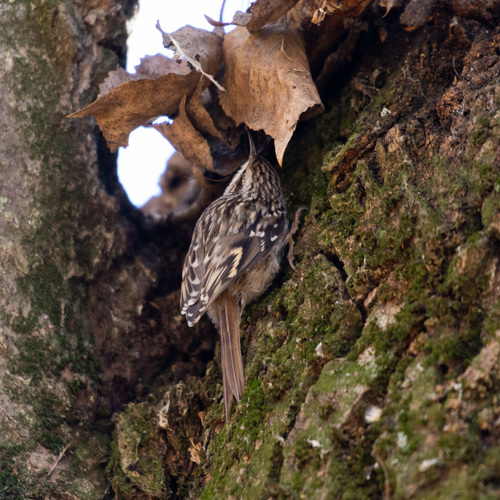
Short-toed Treecreeper (Certhia brachydactyla) Short-toed Treecreeper
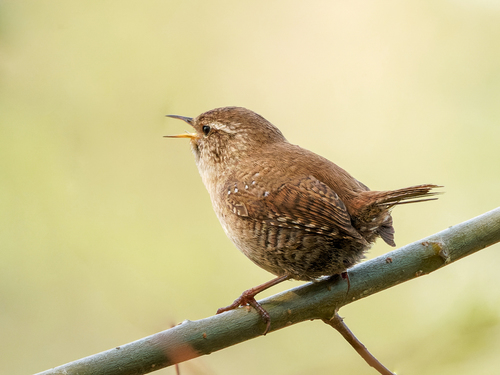
Eurasian Wren (Troglodytes troglodytes) Eurasian Wren

Media

Loading…

In short

The Short-toed Treecreeper and Eurasian Wren are distinct in structure and behavior. The treecreeper has a slender, decurved bill and climbs tree trunks, while the wren has a short, straight bill and is often seen hopping on the ground or in dense vegetation. Vocalizations differ significantly, with the wren's song being louder and more complex.

Identification tips

Look for the treecreeper's slender, decurved bill and its behavior of climbing tree trunks. The wren's short, straight bill and habit of hopping on the ground or in dense vegetation are key. Listen for the wren's loud, complex song compared to the treecreeper's softer calls.

Size

The Short-toed Treecreeper is slightly larger and more elongated than the compact Eurasian Wren.

Plumage

The Short-toed Treecreeper has streaked brown upperparts and a white underbelly, while the Eurasian Wren is uniformly brown with fine barring and lacks the treecreeper's distinct streaking.

Behaviour

Short-toed Treecreepers spiral up tree trunks using their stiff tail for support, whereas Eurasian Wrens are more often seen flitting through undergrowth or perching with their tails cocked.

Habitat

Both species can be found in woodlands, but the Short-toed Treecreeper prefers mature forests with large trees, while the Eurasian Wren is more adaptable and can be found in a variety of habitats, including gardens and hedgerows.

Voice

The Eurasian Wren has a loud, complex song with rapid trills, while the Short-toed Treecreeper's song is softer and less varied.

Submit a better description

Use the same sections as the comparison. Your text is published immediately.

The Short-toed Treecreeper and Eurasian Wren are distinct in structure and behavior. The treecreeper has a slender, decurved bill and climbs tree trunks, while the wren has a short, straight bill and is often seen hopping on the ground or in dense vegetation. Vocalizations differ significantly, with the wren's song being louder and more complex.

Look for the treecreeper's slender, decurved bill and its behavior of climbing tree trunks. The wren's short, straight bill and habit of hopping on the ground or in dense vegetation are key. Listen for the wren's loud, complex song compared to the treecreeper's softer calls.

The Short-toed Treecreeper is slightly larger and more elongated than the compact Eurasian Wren.

The Short-toed Treecreeper has streaked brown upperparts and a white underbelly, while the Eurasian Wren is uniformly brown with fine barring and lacks the treecreeper's distinct streaking.

Short-toed Treecreepers spiral up tree trunks using their stiff tail for support, whereas Eurasian Wrens are more often seen flitting through undergrowth or perching with their tails cocked.

Both species can be found in woodlands, but the Short-toed Treecreeper prefers mature forests with large trees, while the Eurasian Wren is more adaptable and can be found in a variety of habitats, including gardens and hedgerows.

The Eurasian Wren has a loud, complex song with rapid trills, while the Short-toed Treecreeper's song is softer and less varied.

Discard your changes?

You have unsaved edits. If you leave now, those changes will be lost.

Short-toed Treecreeper · Eurasian Wren · My Tricky Birds