Birdr

Siberian Blue Robin vs Thrush Nightingale

Larvivora cyane versus Luscinia luscinia

Play a quiz with Siberian Blue Robin and Thrush Nightingale
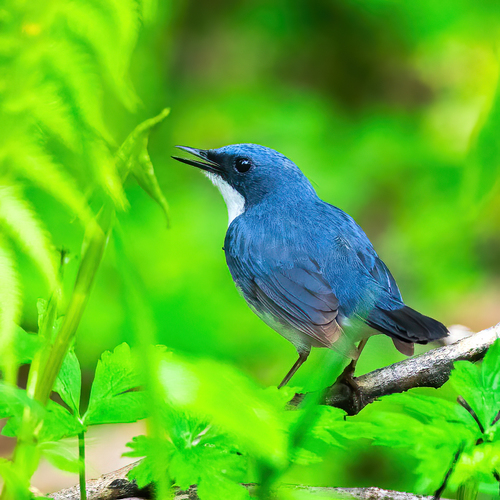
Siberian Blue Robin (Larvivora cyane) Siberian Blue Robin
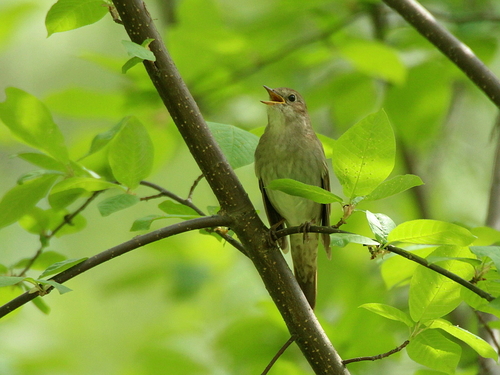
Thrush Nightingale (Luscinia luscinia) Thrush Nightingale

Media

Loading…

In short

The Siberian Blue Robin and Thrush Nightingale can be distinguished by structure and plumage. The Siberian Blue Robin is more compact with a shorter tail and distinct blue plumage in males, while the Thrush Nightingale is larger and uniformly brown. Vocalizations are also a key difference, with the Thrush Nightingale having a more varied and melodious song.

Identification tips

  1. Check size and structure: Thrush Nightingale is larger and bulkier. 2. Look for plumage color: Male Siberian Blue Robins are blue, while Thrush Nightingales are uniformly brown. 3. Listen for song: Thrush Nightingale has a more complex and melodious song. 4. Observe behavior: Siberian Blue Robins are often seen on the forest floor. 5. Consider habitat: Siberian Blue Robins prefer dense forests, while Thrush Nightingales can be in varied wooded areas.

Size

The Thrush Nightingale is generally larger and bulkier than the more compact Siberian Blue Robin.

Plumage

Male Siberian Blue Robins have striking blue upperparts and white underparts, while females and juveniles are brownish. Thrush Nightingales are uniformly brown with no blue coloration, making them less contrasting.

Behaviour

Both species are elusive and often found low in dense undergrowth, but the Siberian Blue Robin is more likely to be seen hopping on the forest floor.

Habitat

Both species prefer dense, moist habitats, but the Siberian Blue Robin is more often found in forested areas, while the Thrush Nightingale can be found in a wider range of wooded habitats.

Voice

The Thrush Nightingale has a rich, varied song with melodious phrases, whereas the Siberian Blue Robin's song is simpler and less varied.

Submit a better description

Use the same sections as the comparison. Your text is published immediately.

The Siberian Blue Robin and Thrush Nightingale can be distinguished by structure and plumage. The Siberian Blue Robin is more compact with a shorter tail and distinct blue plumage in males, while the Thrush Nightingale is larger and uniformly brown. Vocalizations are also a key difference, with the Thrush Nightingale having a more varied and melodious song.

  1. Check size and structure: Thrush Nightingale is larger and bulkier. 2. Look for plumage color: Male Siberian Blue Robins are blue, while Thrush Nightingales are uniformly brown. 3. Listen for song: Thrush Nightingale has a more complex and melodious song. 4. Observe behavior: Siberian Blue Robins are often seen on the forest floor. 5. Consider habitat: Siberian Blue Robins prefer dense forests, while Thrush Nightingales can be in varied wooded areas.

The Thrush Nightingale is generally larger and bulkier than the more compact Siberian Blue Robin.

Male Siberian Blue Robins have striking blue upperparts and white underparts, while females and juveniles are brownish. Thrush Nightingales are uniformly brown with no blue coloration, making them less contrasting.

Both species are elusive and often found low in dense undergrowth, but the Siberian Blue Robin is more likely to be seen hopping on the forest floor.

Both species prefer dense, moist habitats, but the Siberian Blue Robin is more often found in forested areas, while the Thrush Nightingale can be found in a wider range of wooded habitats.

The Thrush Nightingale has a rich, varied song with melodious phrases, whereas the Siberian Blue Robin's song is simpler and less varied.

Discard your changes?

You have unsaved edits. If you leave now, those changes will be lost.

Siberian Blue Robin · Thrush Nightingale · My Tricky Birds