Birdr

Siberian Sand Plover vs Greater Sand Plover

Anarhynchus mongolus versus Anarhynchus leschenaultii

Play a quiz with Siberian Sand Plover and Greater Sand Plover
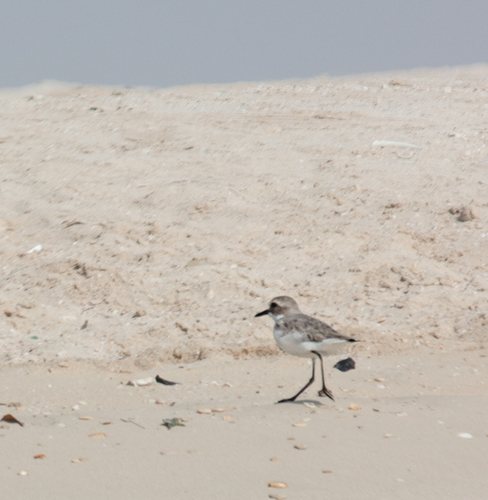
Siberian Sand Plover (Anarhynchus mongolus) Siberian Sand Plover
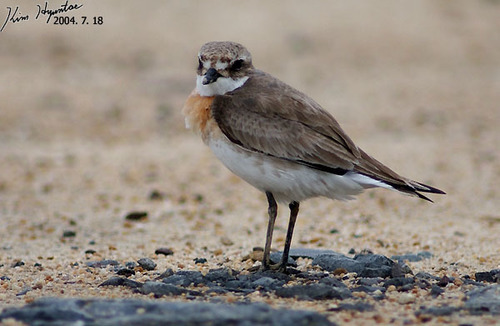
Greater Sand Plover (Anarhynchus leschenaultii) Greater Sand Plover

Media

Loading…

In short

The Siberian Sand Plover and Greater Sand Plover can be challenging to distinguish, especially in non-breeding plumage. The most reliable field mark is the bill: the Greater Sand Plover has a longer and thicker bill compared to the shorter, more delicate bill of the Siberian Sand Plover. Both species share similar habitats and behaviors, complicating identification.

Identification tips

Size

The Greater Sand Plover is generally larger than the Siberian Sand Plover, with a more robust build.

Plumage

In breeding plumage, the Siberian Sand Plover has a distinctive orange chest and black mask, while the Greater Sand Plover also shows a similar pattern but with a less intense orange. In non-breeding plumage, both species appear similar with grayish-brown upperparts and paler underparts.

Behaviour

Both species exhibit similar behaviors, such as feeding on tidal flats and being social in large, dispersed flocks.

Habitat

Both species are found along coastlines and tidal flats during non-breeding seasons, often in mixed flocks with other shorebirds.

Submit a better description

Use the same sections as the comparison. Your text is published immediately.

The Siberian Sand Plover and Greater Sand Plover can be challenging to distinguish, especially in non-breeding plumage. The most reliable field mark is the bill: the Greater Sand Plover has a longer and thicker bill compared to the shorter, more delicate bill of the Siberian Sand Plover. Both species share similar habitats and behaviors, complicating identification.

  • Bill size and shape: Greater Sand Plover has a longer, thicker bill; Siberian Sand Plover's bill is shorter and more delicate.
  • Breeding plumage: Look for the intensity of the orange chest and black mask; Siberian Sand Plover tends to have a more vivid orange.
  • Size and structure: Greater Sand Plover is larger and more robust.
  • Mixed flocks: Both species can be found together, so careful observation of bill and size is crucial.

The Greater Sand Plover is generally larger than the Siberian Sand Plover, with a more robust build.

In breeding plumage, the Siberian Sand Plover has a distinctive orange chest and black mask, while the Greater Sand Plover also shows a similar pattern but with a less intense orange. In non-breeding plumage, both species appear similar with grayish-brown upperparts and paler underparts.

Both species exhibit similar behaviors, such as feeding on tidal flats and being social in large, dispersed flocks.

Both species are found along coastlines and tidal flats during non-breeding seasons, often in mixed flocks with other shorebirds.

Discard your changes?

You have unsaved edits. If you leave now, those changes will be lost.

Siberian Sand Plover · Greater Sand Plover · My Tricky Birds