Birdr

Siberian Sand Plover vs Tibetan Sand Plover

Anarhynchus mongolus versus Anarhynchus atrifrons

Play a quiz with Siberian Sand Plover and Tibetan Sand Plover
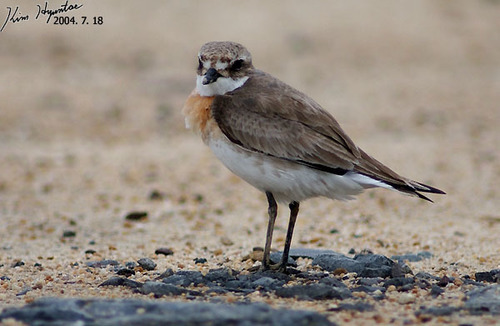
Siberian Sand Plover (Anarhynchus mongolus) Siberian Sand Plover
Tibetan Sand Plover (Anarhynchus atrifrons) Tibetan Sand Plover

Media

Loading…

In short

The Siberian Sand Plover and the Tibetan Sand Plover are similar in appearance, but the Siberian Sand Plover generally appears more robust with a thicker bill and shorter legs. In flight, the feet of the Siberian Sand Plover rarely protrude beyond the tail, unlike the Tibetan Sand Plover. Both species have an orange chest in breeding plumage, making them challenging to distinguish based on color alone.

Identification tips

Size

The Siberian Sand Plover is generally more robust with a thicker bill and shorter legs compared to the Tibetan Sand Plover.

Plumage

Both species have an orange chest in breeding plumage, which can make them difficult to distinguish based on color. Juvenile and non-breeding plumages are also similar.

Behaviour

Both species are social, often found in flocks with other shorebirds. They feed by sight, dashing forward to catch prey.

Habitat

Siberian Sand Plover is found along coastlines from Japan to Australia during non-breeding season, while Tibetan Sand Plover's range is less well-documented but includes similar coastal habitats.

Submit a better description

Use the same sections as the comparison. Your text is published immediately.

The Siberian Sand Plover and the Tibetan Sand Plover are similar in appearance, but the Siberian Sand Plover generally appears more robust with a thicker bill and shorter legs. In flight, the feet of the Siberian Sand Plover rarely protrude beyond the tail, unlike the Tibetan Sand Plover. Both species have an orange chest in breeding plumage, making them challenging to distinguish based on color alone.

  • Structure: Look for the more robust body and thicker bill of the Siberian Sand Plover.
  • Flight: Note that the feet of the Siberian Sand Plover rarely protrude beyond the tail, unlike the Tibetan Sand Plover.
  • Plumage: Be cautious with color; both species have an orange chest in breeding plumage.
  • Leg Length: Siberian Sand Plover has shorter legs compared to the Tibetan Sand Plover.

The Siberian Sand Plover is generally more robust with a thicker bill and shorter legs compared to the Tibetan Sand Plover.

Both species have an orange chest in breeding plumage, which can make them difficult to distinguish based on color. Juvenile and non-breeding plumages are also similar.

Both species are social, often found in flocks with other shorebirds. They feed by sight, dashing forward to catch prey.

Siberian Sand Plover is found along coastlines from Japan to Australia during non-breeding season, while Tibetan Sand Plover's range is less well-documented but includes similar coastal habitats.

Discard your changes?

You have unsaved edits. If you leave now, those changes will be lost.

Siberian Sand Plover · Tibetan Sand Plover · My Tricky Birds