Siberian Sand Plover vs Wilson's Plover
Anarhynchus mongolus versus Anarhynchus wilsonia
Play a quiz with Siberian Sand Plover and Wilson's Plover
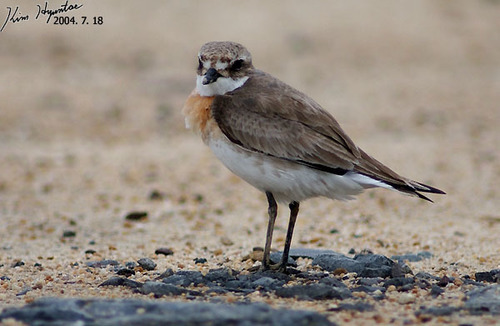
Siberian Sand Plover
Wilson's Plover
In short
The Siberian Sand Plover and Wilson's Plover can be distinguished primarily by their bill size and plumage. Wilson's Plover has a notably heavier black bill and a single breast band, while the Siberian Sand Plover features an orange chest and black mask during the breeding season.
Identification tips
- Bill Size: Wilson's Plover has a heavier black bill. 2. Breast Band: Wilson's Plover has a single breast band, absent in Siberian Sand Plover. 3. Breeding Plumage: Look for the orange chest and black mask in Siberian Sand Plover during breeding season. 4. Habitat: Consider geographic location; Wilson's Plover is more likely in the Americas, while Siberian Sand Plover is found in Asia and Australia.
Size
Wilson's Plover is generally larger with a more robust build compared to the Siberian Sand Plover.
Plumage
Siberian Sand Plover in breeding plumage has an orange chest and black mask, whereas Wilson's Plover has a single breast band and lacks the bright orange coloration.
Behaviour
Both species forage on tidal flats, but Wilson's Plover is more associated with feeding on crustaceans like fiddler crabs, while the Siberian Sand Plover often feeds on small crabs and polychaete worms.
Habitat
Siberian Sand Plover is found along coastlines from Japan to Australia, preferring tidal flats and rarely found inland. Wilson's Plover is associated with coastal areas from the Atlantic Coast to northern Peru, often nesting on beaches and dunes.