Birdr

Siberian Stonechat vs Amur Stonechat

Saxicola maurus versus Saxicola stejnegeri

Play a quiz with Siberian Stonechat and Amur Stonechat

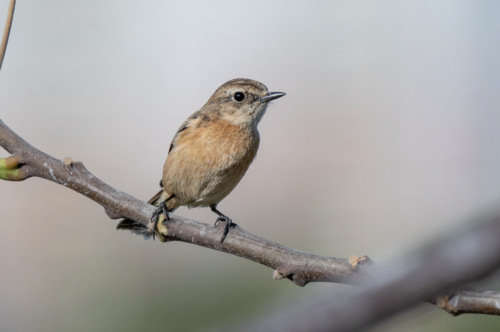
Siberian Stonechat (Saxicola maurus) Siberian Stonechat
Amur Stonechat (Saxicola stejnegeri) Amur Stonechat

Media

Loading…

In short

Siberian Stonechat and Amur Stonechat are closely related and can be challenging to distinguish in the field. Key differences include subtle variations in plumage and structure, with the Siberian Stonechat often showing a more pronounced white rump and less extensive black on the throat. Observing these features with binoculars can aid in identification.

Identification tips

Size

Both species are similar in size, typical of small passerines, making size an unreliable differentiator.

Plumage

Siberian Stonechat typically has a more pronounced white rump and less extensive black on the throat compared to the Amur Stonechat. The Amur Stonechat may show a more uniform and darker throat patch.

Behaviour

Both species exhibit similar behaviors, such as perching conspicuously on low vegetation or fence posts, making behavior an unreliable differentiator.

Habitat

Both species occupy similar habitats, including open fields and scrubby areas, especially during migration and winter.

Voice

Vocalizations are similar and not a reliable field mark for distinguishing these two species.

Submit a better description

Use the same sections as the comparison. Your text is published immediately.

Siberian Stonechat and Amur Stonechat are closely related and can be challenging to distinguish in the field. Key differences include subtle variations in plumage and structure, with the Siberian Stonechat often showing a more pronounced white rump and less extensive black on the throat. Observing these features with binoculars can aid in identification.

  • White Rump: Look for a more pronounced white rump in the Siberian Stonechat.
  • Throat Patch: Check for the extent of the black throat patch; Amur Stonechat may have a more extensive and uniform black throat.
  • Seasonal Variations: Be aware of seasonal plumage changes that might affect visibility of key features.
  • Location and Range: Consider the geographical location as a supporting clue, though ranges overlap during migration.

Both species are similar in size, typical of small passerines, making size an unreliable differentiator.

Siberian Stonechat typically has a more pronounced white rump and less extensive black on the throat compared to the Amur Stonechat. The Amur Stonechat may show a more uniform and darker throat patch.

Both species exhibit similar behaviors, such as perching conspicuously on low vegetation or fence posts, making behavior an unreliable differentiator.

Both species occupy similar habitats, including open fields and scrubby areas, especially during migration and winter.

Vocalizations are similar and not a reliable field mark for distinguishing these two species.

Discard your changes?

You have unsaved edits. If you leave now, those changes will be lost.

Siberian Stonechat · Amur Stonechat · My Tricky Birds