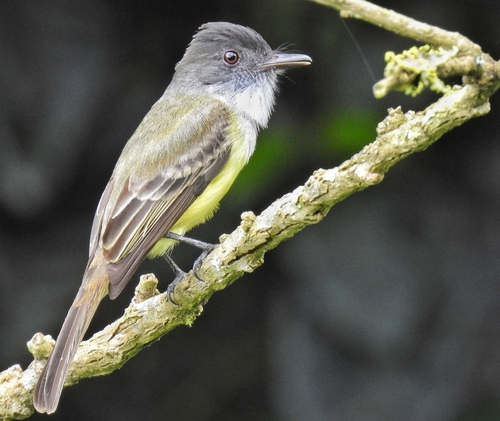
Sibilant Sirystes vs Dusky-capped Flycatcher
Sirystes sibilator versus Myiarchus tuberculifer
Play a quiz with Sibilant Sirystes and Dusky-capped Flycatcher
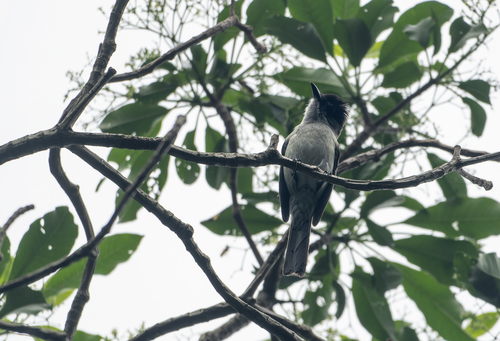
Sibilant Sirystes
Dusky-capped Flycatcher
In short
The Sibilant Sirystes and Dusky-capped Flycatcher can be distinguished by their vocalizations and plumage. The Sibilant Sirystes has a distinctive chattering song and darker plumage with a gray throat and breast, while the Dusky-capped Flycatcher is known for its subtle plumage differences and similar vocalizations across its range.
Identification tips
- Listen for vocalizations: Sibilant Sirystes has a chattering song, while Dusky-capped Flycatcher has more uniform vocalizations. 2. Observe plumage: Look for the gray throat and breast in Sibilant Sirystes. 3. Check habitat: Consider the geographic location, as Sibilant Sirystes is more eastern. 4. Note behavior: Both are cavity-nesters, but territorial behavior may help in identification.
Size
Both species are medium-sized flycatchers, but the Sibilant Sirystes may appear slightly more robust due to its crested appearance.
Plumage
The Sibilant Sirystes is gray above with a pale rump, black crown, wings, and tail, and white edging on the wings. It has a gray throat and breast. In contrast, the Dusky-capped Flycatcher has slight plumage differences among its subspecies, generally showing a contrast between the crown and back.
Behaviour
Both species are cavity-nesters and not particularly social. The Dusky-capped Flycatcher may maintain territories year-round, similar to the Sibilant Sirystes.
Habitat
The Sibilant Sirystes is found in central and eastern South America, while the Dusky-capped Flycatcher has a wider range with subspecies showing habitat preference variations.
Voice
The Sibilant Sirystes has a chattering song, distinct from the Dusky-capped Flycatcher's vocalizations, which are similar across its subspecies and used for species discrimination.
Sibilant Sirystes · Dusky-capped Flycatcher · My Tricky Birds