Birdr

Sickle-winged Nightjar vs Spot-tailed Nightjar

Eleothreptus anomalus versus Antiurus maculicaudus

Play a quiz with Sickle-winged Nightjar and Spot-tailed Nightjar
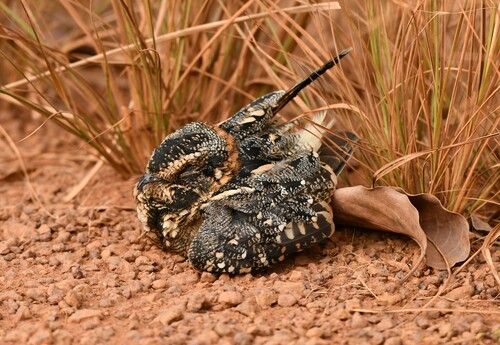
Sickle-winged Nightjar (Eleothreptus anomalus) Sickle-winged Nightjar
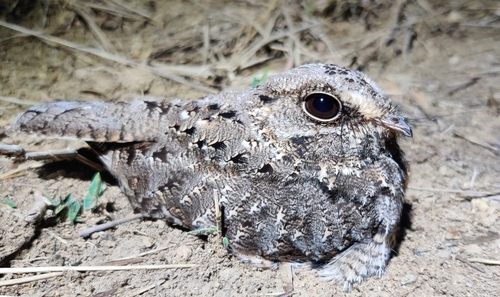
Spot-tailed Nightjar (Antiurus maculicaudus) Spot-tailed Nightjar

Media

Loading…

In short

The Sickle-winged Nightjar and Spot-tailed Nightjar can be distinguished by their wing and tail patterns. The Sickle-winged Nightjar has a distinctive sickle-shaped white patch on its wings, while the Spot-tailed Nightjar features spots on its tail feathers.

Identification tips

  1. Look for the sickle-shaped white patch on the wings of the Sickle-winged Nightjar. 2. Check for white spots on the tail of the Spot-tailed Nightjar. 3. Consider habitat preferences, but be aware of overlap. 4. Use plumage patterns rather than size or behavior for identification.

Size

Both species are similar in size, typical of nightjars, making size a less reliable distinguishing feature.

Plumage

The Sickle-winged Nightjar has a notable sickle-shaped white patch on its wings, which is a key identifier. In contrast, the Spot-tailed Nightjar has distinctive white spots on its tail feathers. Both species have cryptic plumage typical of nightjars, but these wing and tail markings are the most reliable differences.

Behaviour

Both species exhibit typical nightjar behavior, such as feeding on flying insects by sallying from a perch and nesting on the ground. Behavior is not a reliable differentiator.

Habitat

The Sickle-winged Nightjar prefers grassland and marshy edges, while the Spot-tailed Nightjar is found in grassland, savanna, pastures, and agricultural lands. These habitats can overlap, so habitat alone may not be a definitive identifier.

Voice

Vocalizations are not detailed in the sources, so they are not a reliable field mark for differentiation.

Submit a better description

Use the same sections as the comparison. Your text is published immediately.

The Sickle-winged Nightjar and Spot-tailed Nightjar can be distinguished by their wing and tail patterns. The Sickle-winged Nightjar has a distinctive sickle-shaped white patch on its wings, while the Spot-tailed Nightjar features spots on its tail feathers.

  1. Look for the sickle-shaped white patch on the wings of the Sickle-winged Nightjar. 2. Check for white spots on the tail of the Spot-tailed Nightjar. 3. Consider habitat preferences, but be aware of overlap. 4. Use plumage patterns rather than size or behavior for identification.

Both species are similar in size, typical of nightjars, making size a less reliable distinguishing feature.

The Sickle-winged Nightjar has a notable sickle-shaped white patch on its wings, which is a key identifier. In contrast, the Spot-tailed Nightjar has distinctive white spots on its tail feathers. Both species have cryptic plumage typical of nightjars, but these wing and tail markings are the most reliable differences.

Both species exhibit typical nightjar behavior, such as feeding on flying insects by sallying from a perch and nesting on the ground. Behavior is not a reliable differentiator.

The Sickle-winged Nightjar prefers grassland and marshy edges, while the Spot-tailed Nightjar is found in grassland, savanna, pastures, and agricultural lands. These habitats can overlap, so habitat alone may not be a definitive identifier.

Vocalizations are not detailed in the sources, so they are not a reliable field mark for differentiation.

Discard your changes?

You have unsaved edits. If you leave now, those changes will be lost.

Sickle-winged Nightjar · Spot-tailed Nightjar · My Tricky Birds