Birdr

Silvery-cheeked Hornbill vs Black-and-white-casqued Hornbill

Bycanistes brevis versus Bycanistes subcylindricus

Play a quiz with Silvery-cheeked Hornbill and Black-and-white-casqued Hornbill
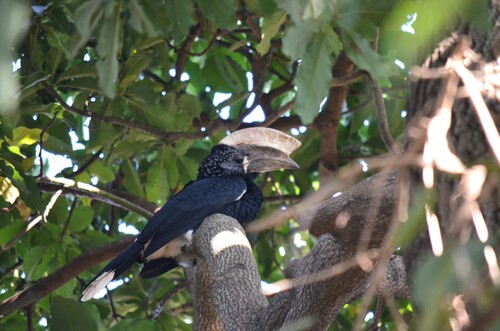
Silvery-cheeked Hornbill (Bycanistes brevis) Silvery-cheeked Hornbill
Black-and-white-casqued Hornbill (Bycanistes subcylindricus) Black-and-white-casqued Hornbill

Media

Loading…

In short

The Silvery-cheeked Hornbill and Black-and-white-casqued Hornbill are both large, striking birds with prominent casques. The Silvery-cheeked Hornbill is distinguished by its silver-white cheek feathers, while the Black-and-white-casqued Hornbill has a more uniform black and white plumage. Both species have similar habitats and behaviors, but their vocalizations differ.

Identification tips

  1. Look for the silvery-white cheeks on the Silvery-cheeked Hornbill. 2. Note the uniform black and white plumage of the Black-and-white-casqued Hornbill. 3. Listen for vocal differences: Silvery-cheeked has a harsh call, while Black-and-white-casqued has a deep, resonant call. 4. Both species are large and have prominent casques, so focus on plumage and calls for identification.

Size

Both species are similar in size, being large hornbills, but the Silvery-cheeked Hornbill may appear slightly bulkier due to its more pronounced casque.

Plumage

The Silvery-cheeked Hornbill has distinctive silver-white cheek feathers, contrasting with its black body. The Black-and-white-casqued Hornbill features a more uniform black and white plumage without the silvery cheeks.

Behaviour

Both species exhibit similar behaviors, often seen in pairs or small groups, and are known for their strong flight and loud calls.

Habitat

Both species inhabit similar forested environments, often in montane and lowland forests across their overlapping ranges in Africa.

Voice

The Silvery-cheeked Hornbill has a loud, harsh call, while the Black-and-white-casqued Hornbill's call is more of a deep, resonant sound. These vocal differences can be useful for identification.

Submit a better description

Use the same sections as the comparison. Your text is published immediately.

The Silvery-cheeked Hornbill and Black-and-white-casqued Hornbill are both large, striking birds with prominent casques. The Silvery-cheeked Hornbill is distinguished by its silver-white cheek feathers, while the Black-and-white-casqued Hornbill has a more uniform black and white plumage. Both species have similar habitats and behaviors, but their vocalizations differ.

  1. Look for the silvery-white cheeks on the Silvery-cheeked Hornbill. 2. Note the uniform black and white plumage of the Black-and-white-casqued Hornbill. 3. Listen for vocal differences: Silvery-cheeked has a harsh call, while Black-and-white-casqued has a deep, resonant call. 4. Both species are large and have prominent casques, so focus on plumage and calls for identification.

Both species are similar in size, being large hornbills, but the Silvery-cheeked Hornbill may appear slightly bulkier due to its more pronounced casque.

The Silvery-cheeked Hornbill has distinctive silver-white cheek feathers, contrasting with its black body. The Black-and-white-casqued Hornbill features a more uniform black and white plumage without the silvery cheeks.

Both species exhibit similar behaviors, often seen in pairs or small groups, and are known for their strong flight and loud calls.

Both species inhabit similar forested environments, often in montane and lowland forests across their overlapping ranges in Africa.

The Silvery-cheeked Hornbill has a loud, harsh call, while the Black-and-white-casqued Hornbill's call is more of a deep, resonant sound. These vocal differences can be useful for identification.

Discard your changes?

You have unsaved edits. If you leave now, those changes will be lost.

Silvery-cheeked Hornbill · Black-and-white-casqued Hornbill · My Tricky Birds