Birdr

Singing Bushlark vs Oriental Skylark

Mirafra javanica versus Alauda gulgula

Play a quiz with Singing Bushlark and Oriental Skylark
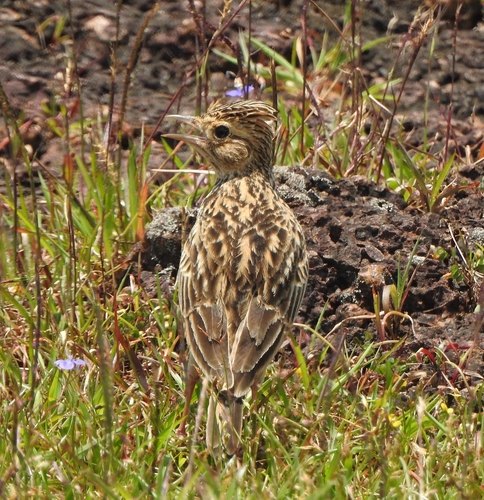
Singing Bushlark (Mirafra javanica) Singing Bushlark
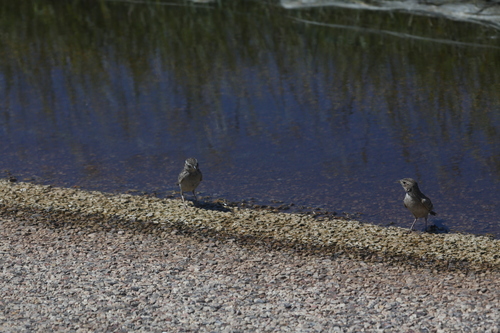
Oriental Skylark (Alauda gulgula) Oriental Skylark

Media

Loading…

In short

The Singing Bushlark and Oriental Skylark can be distinguished by their structure and behavior. The Singing Bushlark is generally more robust with a shorter tail and less prominent supercilium, whereas the Oriental Skylark appears slimmer with a longer tail and a more defined supercilium.

Identification tips

  1. Look for the shorter tail and less prominent supercilium on the Singing Bushlark. 2. Observe the flight pattern: Singing Bushlark has shorter, fluttering flights, while Oriental Skylark performs higher, sustained song flights. 3. Listen for the song: Singing Bushlark has a varied, melodious song, whereas Oriental Skylark has a more continuous song often delivered in flight.

Size

The Singing Bushlark is slightly more robust and compact compared to the slimmer Oriental Skylark.

Plumage

Both species have variable plumage, but the Singing Bushlark tends to have a more heavily marked appearance, especially in darker subspecies, while the Oriental Skylark has a more uniform and paler look with a more pronounced supercilium.

Behaviour

The Singing Bushlark often forages on the ground and may be seen performing short, fluttering flights. The Oriental Skylark is known for its more sustained and higher aerial song displays.

Habitat

Both species inhabit open grasslands, but the Singing Bushlark may also be found in more varied habitats including agricultural areas, while the Oriental Skylark prefers more open and less disturbed grasslands.

Voice

The Singing Bushlark has a varied song with melodious notes, while the Oriental Skylark's song is more continuous and can be delivered during flight.

Submit a better description

Use the same sections as the comparison. Your text is published immediately.

The Singing Bushlark and Oriental Skylark can be distinguished by their structure and behavior. The Singing Bushlark is generally more robust with a shorter tail and less prominent supercilium, whereas the Oriental Skylark appears slimmer with a longer tail and a more defined supercilium.

  1. Look for the shorter tail and less prominent supercilium on the Singing Bushlark. 2. Observe the flight pattern: Singing Bushlark has shorter, fluttering flights, while Oriental Skylark performs higher, sustained song flights. 3. Listen for the song: Singing Bushlark has a varied, melodious song, whereas Oriental Skylark has a more continuous song often delivered in flight.

The Singing Bushlark is slightly more robust and compact compared to the slimmer Oriental Skylark.

Both species have variable plumage, but the Singing Bushlark tends to have a more heavily marked appearance, especially in darker subspecies, while the Oriental Skylark has a more uniform and paler look with a more pronounced supercilium.

The Singing Bushlark often forages on the ground and may be seen performing short, fluttering flights. The Oriental Skylark is known for its more sustained and higher aerial song displays.

Both species inhabit open grasslands, but the Singing Bushlark may also be found in more varied habitats including agricultural areas, while the Oriental Skylark prefers more open and less disturbed grasslands.

The Singing Bushlark has a varied song with melodious notes, while the Oriental Skylark's song is more continuous and can be delivered during flight.

Discard your changes?

You have unsaved edits. If you leave now, those changes will be lost.

Singing Bushlark · Oriental Skylark · My Tricky Birds