Birdr

Slate-coloured Solitaire vs Wood Thrush

Myadestes unicolor versus Hylocichla mustelina

Play a quiz with Slate-coloured Solitaire and Wood Thrush
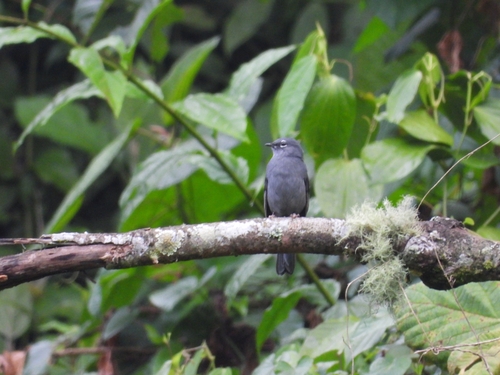
Slate-coloured Solitaire (Myadestes unicolor) Slate-coloured Solitaire
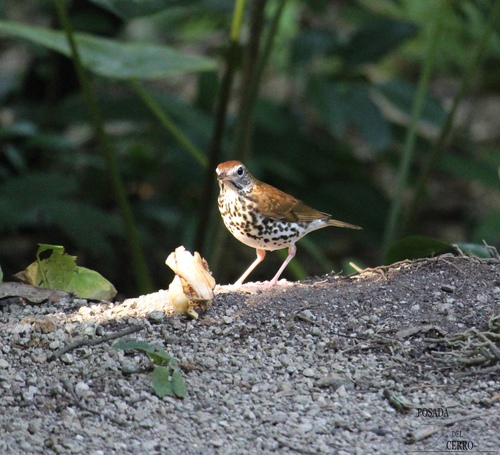
Wood Thrush (Hylocichla mustelina) Wood Thrush

Media

Loading…

In short

The Slate-colored Solitaire and Wood Thrush are both thrushes but can be distinguished by their plumage and vocalizations. The Slate-colored Solitaire is more uniformly gray, while the Wood Thrush has a distinctive spotted breast and a more complex song.

Identification tips

1. Look for the Slate-colored Solitaire's uniform gray plumage and white eye-ring. 2. Note the Wood Thrush's spotted breast and warm brown upperparts. 3. Listen for the Wood Thrush's complex, flute-like song, especially at dawn and dusk. 4. Consider habitat: montane forests suggest Slate-colored Solitaire, while deciduous woodlands indicate Wood Thrush.

Size

Both species are similar in size, but the Wood Thrush is slightly larger and stockier.

Plumage

The Slate-colored Solitaire is predominantly slate-gray with a subtle white eye-ring, whereas the Wood Thrush has a warm brown back and a white belly with bold black spots.

Behaviour

Both species are generally solitary and secretive, but the Wood Thrush is more often found foraging on the ground.

Habitat

The Slate-colored Solitaire is typically found in montane forests of Central America, while the Wood Thrush inhabits deciduous forests in eastern North America.

Voice

The Slate-colored Solitaire has a simple, flute-like song, whereas the Wood Thrush is known for its ethereal, multi-part song that includes harmonized notes.

Submit a better description

Use the same sections as the comparison. Your text is published immediately.

The Slate-colored Solitaire and Wood Thrush are both thrushes but can be distinguished by their plumage and vocalizations. The Slate-colored Solitaire is more uniformly gray, while the Wood Thrush has a distinctive spotted breast and a more complex song.

1. Look for the Slate-colored Solitaire's uniform gray plumage and white eye-ring. 2. Note the Wood Thrush's spotted breast and warm brown upperparts. 3. Listen for the Wood Thrush's complex, flute-like song, especially at dawn and dusk. 4. Consider habitat: montane forests suggest Slate-colored Solitaire, while deciduous woodlands indicate Wood Thrush.

Both species are similar in size, but the Wood Thrush is slightly larger and stockier.

The Slate-colored Solitaire is predominantly slate-gray with a subtle white eye-ring, whereas the Wood Thrush has a warm brown back and a white belly with bold black spots.

Both species are generally solitary and secretive, but the Wood Thrush is more often found foraging on the ground.

The Slate-colored Solitaire is typically found in montane forests of Central America, while the Wood Thrush inhabits deciduous forests in eastern North America.

The Slate-colored Solitaire has a simple, flute-like song, whereas the Wood Thrush is known for its ethereal, multi-part song that includes harmonized notes.

Discard your changes?

You have unsaved edits. If you leave now, those changes will be lost.

Slate-coloured Solitaire · Wood Thrush · My Tricky Birds