
Slate-headed Tody-Flycatcher vs Black-headed Tody-Flycatcher
Poecilotriccus sylvia versus Todirostrum nigriceps
Play a quiz with Slate-headed Tody-Flycatcher and Black-headed Tody-Flycatcher
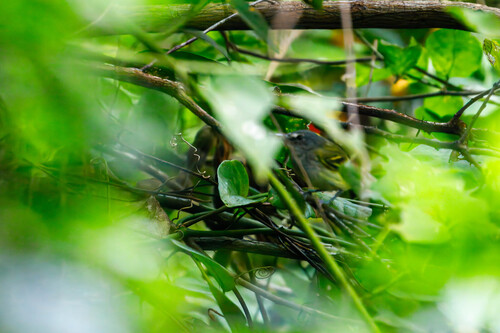
Slate-headed Tody-Flycatcher
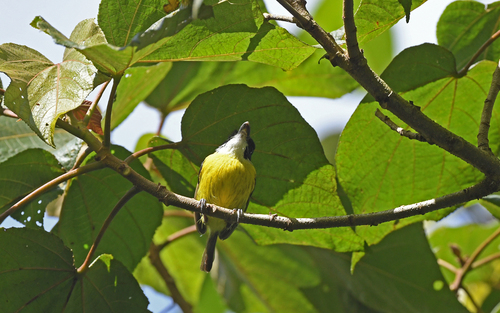
Black-headed Tody-Flycatcher
In short
The Slate-headed Tody-Flycatcher and Black-headed Tody-Flycatcher can be distinguished by head coloration and habitat preference. The Slate-headed has a dark gray head with a pale loral mark, while the Black-headed has a solid black head. Both species inhabit dense vegetation, but their specific preferences may vary.
Identification tips
- Head Color: Look for the dark gray head with a pale loral mark on the Slate-headed, versus the solid black head of the Black-headed.
- Wingbars: Note the bold yellow wingbars on the Slate-headed.
- Habitat: Observe the type of dense vegetation; while both prefer such environments, subtle differences might be noted in specific locations.
- Vocalization: Listen for insect- or frog-like sounds, though this may not be a reliable differentiator.
Size
Both species are small tody-flycatchers, similar in size.
Plumage
The Slate-headed Tody-Flycatcher has a dark gray head with a pale loral mark and olive-green upperparts with two bold yellow wingbars. The Black-headed Tody-Flycatcher has a solid black head, which is a key distinguishing feature.
Behaviour
Both species are insectivorous and may also take small fruits. They are active and often found in dense vegetation.
Habitat
The Slate-headed Tody-Flycatcher prefers dense shrubbery and vine tangles, while the Black-headed Tody-Flycatcher is also found in dense vegetation but may have slightly different habitat preferences.
Voice
Both species produce vocalizations that sound insect- or frog-like, making vocal identification challenging.
Slate-headed Tody-Flycatcher · Black-headed Tody-Flycatcher · My Tricky Birds