Birdr

Slaty-backed Flycatcher vs Slaty-blue Flycatcher

Ficedula erithacus versus Ficedula tricolor

Play a quiz with Slaty-backed Flycatcher and Slaty-blue Flycatcher
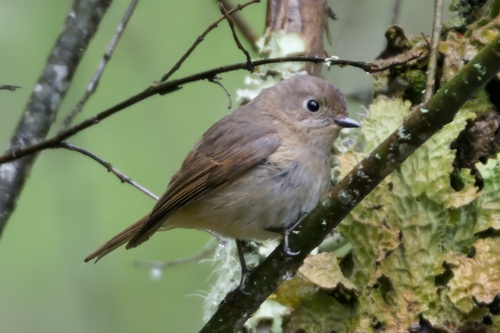
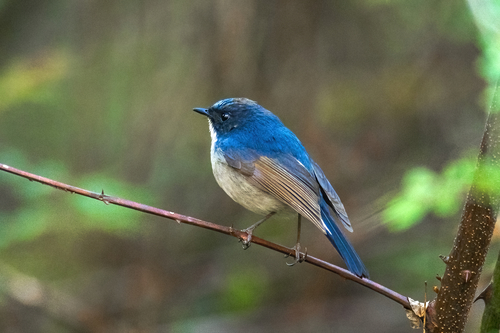
Slaty-backed Flycatcher (Ficedula erithacus) Slaty-backed Flycatcher
Slaty-blue Flycatcher (Ficedula tricolor) Slaty-blue Flycatcher

Media

Loading…

In short

The Slaty-backed Flycatcher and Slaty-blue Flycatcher can be distinguished by their plumage and habitat preferences. The Slaty-backed Flycatcher typically has a more uniformly slaty-grey back, while the Slaty-blue Flycatcher shows a richer blue tone. Both species share similar habitats, but the Slaty-blue Flycatcher is more often found in dense undergrowth.

Identification tips

  1. Look for the uniform slaty-grey back of the Slaty-backed Flycatcher versus the richer blue tones of the Slaty-blue Flycatcher. 2. Observe habitat: Slaty-blue Flycatchers prefer denser undergrowth. 3. Note that both species are similar in size and behavior, making plumage and habitat the most reliable field marks.

Size

Both species are similar in size, typical of small flycatchers.

Plumage

The Slaty-backed Flycatcher has a more uniform slaty-grey back and lacks the richer blue tones found in the Slaty-blue Flycatcher. The latter often exhibits a brighter blue on the upperparts, especially in males.

Behaviour

Both species exhibit typical flycatcher behavior, often seen sallying from perches to catch insects. No significant behavioral differences noted.

Habitat

Both species inhabit forested areas, but the Slaty-blue Flycatcher is more frequently found in dense undergrowth, while the Slaty-backed Flycatcher may be seen in slightly more open forested areas.

Voice

Vocalizations are not well-documented for field differentiation. Both species have typical flycatcher calls.

Submit a better description

Use the same sections as the comparison. Your text is published immediately.

The Slaty-backed Flycatcher and Slaty-blue Flycatcher can be distinguished by their plumage and habitat preferences. The Slaty-backed Flycatcher typically has a more uniformly slaty-grey back, while the Slaty-blue Flycatcher shows a richer blue tone. Both species share similar habitats, but the Slaty-blue Flycatcher is more often found in dense undergrowth.

  1. Look for the uniform slaty-grey back of the Slaty-backed Flycatcher versus the richer blue tones of the Slaty-blue Flycatcher. 2. Observe habitat: Slaty-blue Flycatchers prefer denser undergrowth. 3. Note that both species are similar in size and behavior, making plumage and habitat the most reliable field marks.

Both species are similar in size, typical of small flycatchers.

The Slaty-backed Flycatcher has a more uniform slaty-grey back and lacks the richer blue tones found in the Slaty-blue Flycatcher. The latter often exhibits a brighter blue on the upperparts, especially in males.

Both species exhibit typical flycatcher behavior, often seen sallying from perches to catch insects. No significant behavioral differences noted.

Both species inhabit forested areas, but the Slaty-blue Flycatcher is more frequently found in dense undergrowth, while the Slaty-backed Flycatcher may be seen in slightly more open forested areas.

Vocalizations are not well-documented for field differentiation. Both species have typical flycatcher calls.

Discard your changes?

You have unsaved edits. If you leave now, those changes will be lost.

Slaty-backed Flycatcher · Slaty-blue Flycatcher · My Tricky Birds