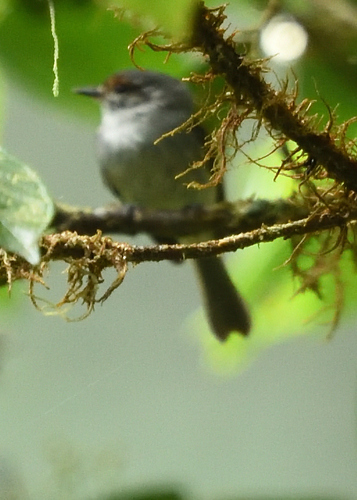
Slaty-capped Flycatcher vs Rufous-browed Tyrannulet
Leptopogon superciliaris versus Phylloscartes superciliaris
Play a quiz with Slaty-capped Flycatcher and Rufous-browed Tyrannulet
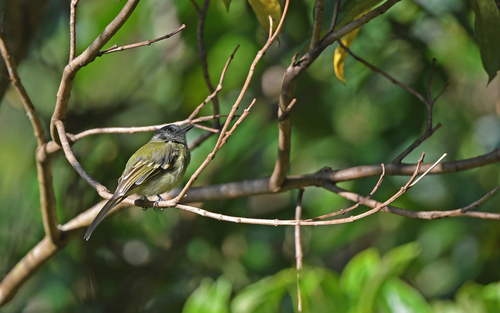
Slaty-capped Flycatcher
Rufous-browed Tyrannulet
In short
The Slaty-capped Flycatcher and Rufous-browed Tyrannulet can be distinguished by structural differences and plumage details. The Slaty-capped Flycatcher has a more robust build with a distinct slaty cap, while the Rufous-browed Tyrannulet features a rufous brow and is more slender. Both species inhabit similar altitudinal ranges but differ in their preferred microhabitats.
Identification tips
- Look for the slaty cap on the Slaty-capped Flycatcher. 2. Note the rufous brow on the Rufous-browed Tyrannulet. 3. Observe the overall build: Slaty-capped is more robust, Rufous-browed is slender. 4. Consider habitat preference: Rufous-browed is more often in the canopy.
Size
The Slaty-capped Flycatcher is generally more robust compared to the more slender Rufous-browed Tyrannulet.
Plumage
The Slaty-capped Flycatcher has a distinct slaty cap and a more uniform olive-green body. In contrast, the Rufous-browed Tyrannulet is characterized by its rufous brow and slightly paler underparts.
Behaviour
Both species join mixed-species flocks, but the Rufous-browed Tyrannulet is more often found in the canopy, while the Slaty-capped Flycatcher may be seen at various levels.
Habitat
Both species occupy similar altitudinal ranges, but the Rufous-browed Tyrannulet prefers canopy habitats, whereas the Slaty-capped Flycatcher is more adaptable to different forest strata.
Voice
Vocal differences exist but are not well-documented in the provided sources.
Slaty-capped Flycatcher · Rufous-browed Tyrannulet · My Tricky Birds