Birdr

Slaty Spinetail vs Pale-breasted Spinetail

Synallaxis brachyura versus Synallaxis albescens

Play a quiz with Slaty Spinetail and Pale-breasted Spinetail
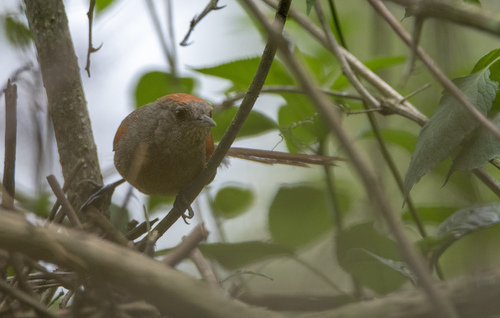
Slaty Spinetail (Synallaxis brachyura) Slaty Spinetail
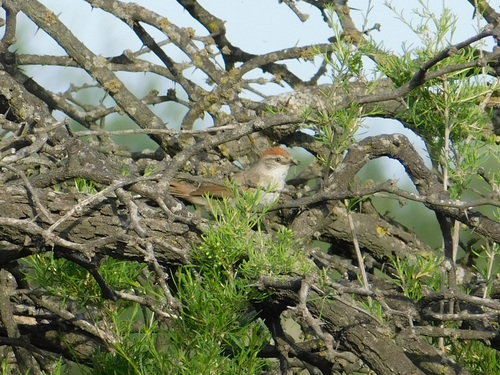
Pale-breasted Spinetail (Synallaxis albescens) Pale-breasted Spinetail

Media

Loading…

In short

The Slaty Spinetail is characterized by its uniformly dark gray body with deep rufous wing coverts and a rufous crown, while the Pale-breasted Spinetail is generally paler below with a brown tail and rufous confined to the wing coverts. Both species are found in dense vegetation, but their plumage and tail color are key differentiators.

Identification tips

  1. Look for the uniformly dark gray body and rufous crown of the Slaty Spinetail. 2. Note the paler underparts and brown tail of the Pale-breasted Spinetail. 3. Both species have rufous wing coverts, but the Pale-breasted's rufous is less extensive. 4. Observe habitat preferences: Slaty Spinetails are more likely in subtropical zones, while Pale-breasted Spinetails avoid closed forests.

Size

Both species are similar in size, typical of spinetails, with no significant size difference noted.

Plumage

The Slaty Spinetail has a uniformly dark gray body with deep rufous wing coverts and a rufous crown. In contrast, the Pale-breasted Spinetail is paler below with a brown tail, and the rufous is largely confined to the wing coverts.

Behaviour

Both species forage in low, dense vegetation, often in pairs or family groups. They construct nests of dried grasses and twigs.

Habitat

The Slaty Spinetail is found in tropical and subtropical zones from Honduras to southwest Ecuador, often in low, dense vegetation. The Pale-breasted Spinetail is widespread but avoids closed forests, preferring similar dense habitats.

Voice

No specific vocalization differences are noted between the two species in the available sources.

Submit a better description

Use the same sections as the comparison. Your text is published immediately.

The Slaty Spinetail is characterized by its uniformly dark gray body with deep rufous wing coverts and a rufous crown, while the Pale-breasted Spinetail is generally paler below with a brown tail and rufous confined to the wing coverts. Both species are found in dense vegetation, but their plumage and tail color are key differentiators.

  1. Look for the uniformly dark gray body and rufous crown of the Slaty Spinetail. 2. Note the paler underparts and brown tail of the Pale-breasted Spinetail. 3. Both species have rufous wing coverts, but the Pale-breasted's rufous is less extensive. 4. Observe habitat preferences: Slaty Spinetails are more likely in subtropical zones, while Pale-breasted Spinetails avoid closed forests.

Both species are similar in size, typical of spinetails, with no significant size difference noted.

The Slaty Spinetail has a uniformly dark gray body with deep rufous wing coverts and a rufous crown. In contrast, the Pale-breasted Spinetail is paler below with a brown tail, and the rufous is largely confined to the wing coverts.

Both species forage in low, dense vegetation, often in pairs or family groups. They construct nests of dried grasses and twigs.

The Slaty Spinetail is found in tropical and subtropical zones from Honduras to southwest Ecuador, often in low, dense vegetation. The Pale-breasted Spinetail is widespread but avoids closed forests, preferring similar dense habitats.

No specific vocalization differences are noted between the two species in the available sources.

Discard your changes?

You have unsaved edits. If you leave now, those changes will be lost.

Slaty Spinetail · Pale-breasted Spinetail · My Tricky Birds