Birdr

Smew vs Goosander

Mergellus albellus versus Mergus merganser

Play a quiz with Smew and Goosander
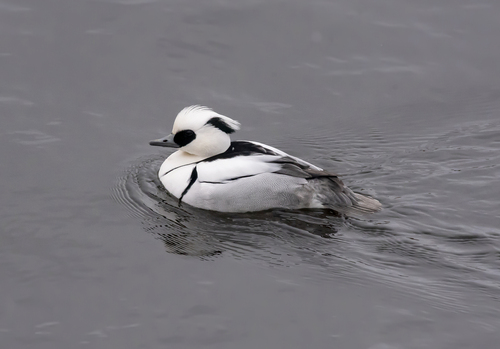
Smew (Mergellus albellus) Smew
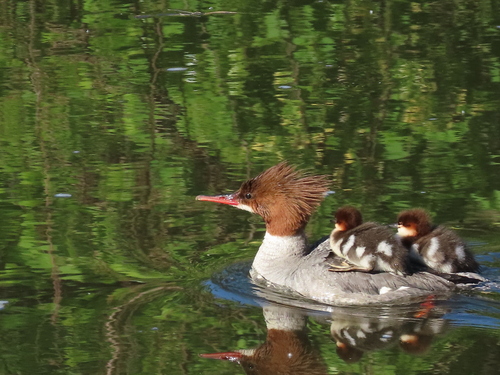
Goosander (Mergus merganser) Goosander

Media

Loading…

In short

The Smew and Goosander are both diving ducks with distinct plumage differences. The Smew is smaller and more compact, with males displaying a striking black-and-white 'cracked ice' pattern, while the Goosander is larger with a more streamlined profile and males have a dark green head and white body. Females of both species are gray with reddish-brown heads, but the Smew has bold white cheeks.

Identification tips

1. Look for the male Smew's 'cracked ice' black-and-white plumage, which is unique among ducks. 2. Note the size difference: Smews are smaller and more compact than Goosanders. 3. Female Smews have bold white cheeks, unlike female Goosanders. 4. Observe habitat: Smews prefer sheltered bays and forested lakes, whereas Goosanders are often on larger, open bodies of water.

Size

The Smew is smaller and more compact compared to the larger, more streamlined Goosander.

Plumage

Male Smews have a unique black-and-white pattern, while male Goosanders have a dark green head and white body. Female Smews have a gray body with a rusty brown head and bold white cheeks, whereas female Goosanders are gray with a reddish-brown head but lack the distinct white cheeks.

Behaviour

Both species are diving ducks, often seen energetically diving for food. The Smew tends to feed on small fish and aquatic invertebrates, while the Goosander is known as a top predator in aquatic food chains.

Habitat

Smews breed in boreal forests with freshwater lakes and rivers, while Goosanders are found on large lakes, rivers, and reservoirs, often in more open waters.

Submit a better description

Use the same sections as the comparison. Your text is published immediately.

The Smew and Goosander are both diving ducks with distinct plumage differences. The Smew is smaller and more compact, with males displaying a striking black-and-white 'cracked ice' pattern, while the Goosander is larger with a more streamlined profile and males have a dark green head and white body. Females of both species are gray with reddish-brown heads, but the Smew has bold white cheeks.

1. Look for the male Smew's 'cracked ice' black-and-white plumage, which is unique among ducks. 2. Note the size difference: Smews are smaller and more compact than Goosanders. 3. Female Smews have bold white cheeks, unlike female Goosanders. 4. Observe habitat: Smews prefer sheltered bays and forested lakes, whereas Goosanders are often on larger, open bodies of water.

The Smew is smaller and more compact compared to the larger, more streamlined Goosander.

Male Smews have a unique black-and-white pattern, while male Goosanders have a dark green head and white body. Female Smews have a gray body with a rusty brown head and bold white cheeks, whereas female Goosanders are gray with a reddish-brown head but lack the distinct white cheeks.

Both species are diving ducks, often seen energetically diving for food. The Smew tends to feed on small fish and aquatic invertebrates, while the Goosander is known as a top predator in aquatic food chains.

Smews breed in boreal forests with freshwater lakes and rivers, while Goosanders are found on large lakes, rivers, and reservoirs, often in more open waters.

Discard your changes?

You have unsaved edits. If you leave now, those changes will be lost.

Smew · Goosander · My Tricky Birds