Birdr

Smoky-brown Woodpecker vs Rufous-winged Woodpecker

Leuconotopicus fumigatus versus Piculus simplex

Play a quiz with Smoky-brown Woodpecker and Rufous-winged Woodpecker
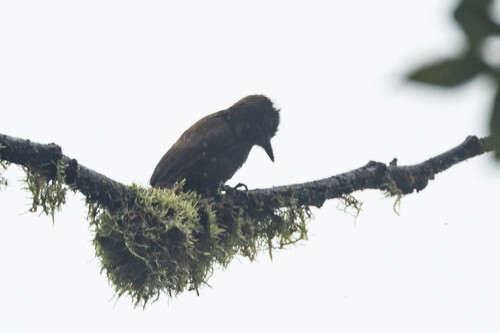
Smoky-brown Woodpecker (Leuconotopicus fumigatus) Smoky-brown Woodpecker
Rufous-winged Woodpecker (Piculus simplex) Rufous-winged Woodpecker

Media

Loading…

In short

The Smoky-brown Woodpecker and Rufous-winged Woodpecker can be distinguished by their wing coloration and the amount of white around the eyes. Smoky-brown Woodpecker has more white around the eyes, while Rufous-winged Woodpecker features rufous tones in the wings. Both species belong to the woodpecker family, but their plumage and habitat preferences help separate them in the field.

Identification tips

Look for the white around the eyes in Smoky-brown Woodpecker and the rufous wings in Rufous-winged Woodpecker. Consider habitat and elevation, especially in the Andean region, where Smoky-brown is found at higher elevations. Behavior such as foraging height might offer additional clues.

Size

Both species are similar in size, typical of small to medium-sized woodpeckers, so size is not a reliable distinguishing feature.

Plumage

Smoky-brown Woodpecker has much white around the eyes and generally lacks the rufous tones found in the wings of the Rufous-winged Woodpecker. Rufous-winged Woodpecker, as the name suggests, displays rufous coloration in the wings, which is a key feature to look for.

Behaviour

Both species may forage in mixed-species flocks and are often seen in pairs. Smoky-brown Woodpecker forages at all levels but particularly in lower and middle strata, which might be a subtle behavioral cue.

Habitat

Smoky-brown Woodpecker is found at higher elevations in the Andean region and more broadly in southern Mexico and Central America. Rufous-winged Woodpecker's specific habitat preferences are not detailed, but it shares the general woodpecker habitat of forests and wooded areas.

Voice

Specific vocalization differences are not detailed, suggesting that calls may not be the most reliable distinguishing feature in the field.

Submit a better description

Use the same sections as the comparison. Your text is published immediately.

The Smoky-brown Woodpecker and Rufous-winged Woodpecker can be distinguished by their wing coloration and the amount of white around the eyes. Smoky-brown Woodpecker has more white around the eyes, while Rufous-winged Woodpecker features rufous tones in the wings. Both species belong to the woodpecker family, but their plumage and habitat preferences help separate them in the field.

Look for the white around the eyes in Smoky-brown Woodpecker and the rufous wings in Rufous-winged Woodpecker. Consider habitat and elevation, especially in the Andean region, where Smoky-brown is found at higher elevations. Behavior such as foraging height might offer additional clues.

Both species are similar in size, typical of small to medium-sized woodpeckers, so size is not a reliable distinguishing feature.

Smoky-brown Woodpecker has much white around the eyes and generally lacks the rufous tones found in the wings of the Rufous-winged Woodpecker. Rufous-winged Woodpecker, as the name suggests, displays rufous coloration in the wings, which is a key feature to look for.

Both species may forage in mixed-species flocks and are often seen in pairs. Smoky-brown Woodpecker forages at all levels but particularly in lower and middle strata, which might be a subtle behavioral cue.

Smoky-brown Woodpecker is found at higher elevations in the Andean region and more broadly in southern Mexico and Central America. Rufous-winged Woodpecker's specific habitat preferences are not detailed, but it shares the general woodpecker habitat of forests and wooded areas.

Specific vocalization differences are not detailed, suggesting that calls may not be the most reliable distinguishing feature in the field.

Discard your changes?

You have unsaved edits. If you leave now, those changes will be lost.

Smoky-brown Woodpecker · Rufous-winged Woodpecker · My Tricky Birds