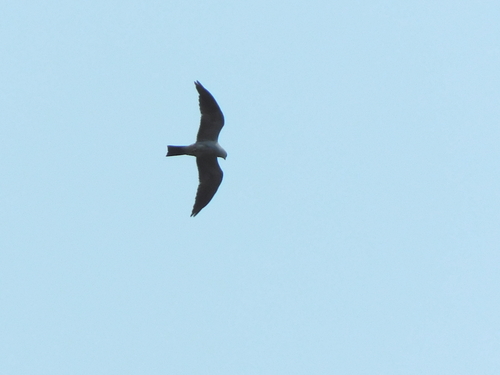
Snail Kite vs Mississippi Kite
Rostrhamus sociabilis versus Ictinia mississippiensis
Play a quiz with Snail Kite and Mississippi Kite
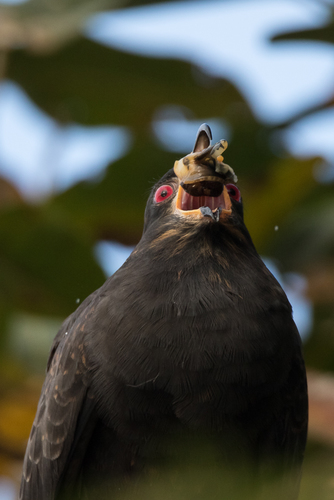
Snail Kite
Mississippi Kite
In short
The Snail Kite and Mississippi Kite can be distinguished by their habitat preferences and plumage. The Snail Kite is typically found near water bodies where it hunts for snails, while the Mississippi Kite prefers open woodlands and urban areas. Plumage differences are also notable, with the Snail Kite having a more uniform dark appearance compared to the lighter and more contrasting plumage of the Mississippi Kite.
Identification tips
- Habitat: Look for Snail Kites near water bodies; Mississippi Kites are more likely in open woodlands or urban areas. 2. Plumage: Note the dark, uniform color of the Snail Kite versus the lighter, contrasting plumage of the Mississippi Kite. 3. Behavior: Observe flight patterns; Snail Kites fly low over water, while Mississippi Kites soar higher. 4. Juveniles: Be cautious with juvenile Mississippi Kites, as their streaked plumage can be misleading.
Size
Both species are similar in size, but the Snail Kite has a slightly bulkier appearance due to its broader wings and tail.
Plumage
The Snail Kite is predominantly dark gray to black with red eyes and a hooked bill, whereas the Mississippi Kite has a lighter gray body with a pale head and dark wingtips. Juvenile Mississippi Kites can be more challenging to distinguish due to their streaked plumage.
Behaviour
Snail Kites are often seen flying low over marshes, while Mississippi Kites are more likely to be observed soaring high in the sky or perched in trees.
Habitat
Snail Kites are closely associated with freshwater marshes and lakes, where they hunt for snails. In contrast, Mississippi Kites are found in open woodlands, savannas, and urban areas, particularly during the breeding season.
Voice
Vocalizations are not a primary distinguishing feature between these species, as both are relatively quiet. However, the Mississippi Kite may emit a high-pitched, whistling call during the breeding season.