Birdr

Snow Bunting vs Corn Bunting

Plectrophenax nivalis versus Emberiza calandra

Play a quiz with Snow Bunting and Corn Bunting
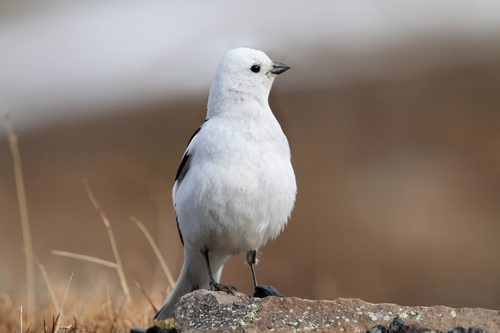
Snow Bunting (Plectrophenax nivalis) Snow Bunting
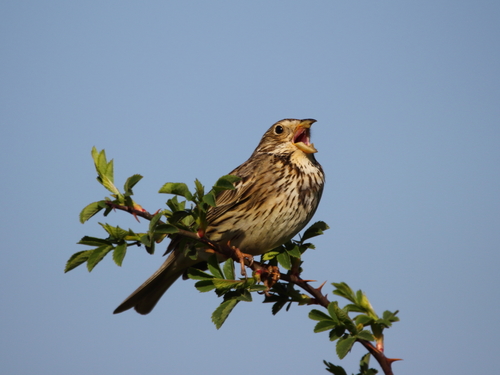
Corn Bunting (Emberiza calandra) Corn Bunting

Media

Loading…

In short

The Snow Bunting and Corn Bunting are distinct in both appearance and habitat preference. Snow Buntings are typically found in colder, open areas, while Corn Buntings prefer warmer, agricultural landscapes. Key differences include bill shape and plumage patterns.

Identification tips

  1. Bill Shape: Snow Buntings have a shorter, conical bill, while Corn Buntings have a thicker, more robust bill. 2. Plumage: Look for the bright white and black pattern in Snow Buntings, especially in flight. Corn Buntings are more uniformly brown. 3. Habitat: Consider the environment; Snow Buntings are more likely in colder, open areas, while Corn Buntings are found in warmer, agricultural settings. 4. Vocalization: Listen for the jangling song of the Corn Bunting, distinct from the melodic song of the Snow Bunting.

Size

Corn Buntings are generally larger and more robust than Snow Buntings.

Plumage

Snow Buntings have a striking white and black plumage, especially in males during breeding season, while Corn Buntings are more uniformly brown and streaked, lacking the stark contrast seen in Snow Buntings.

Behaviour

Snow Buntings are often seen in flocks during winter, foraging on the ground in open fields. Corn Buntings also forage on the ground but are more solitary or in small groups.

Habitat

Snow Buntings inhabit tundra and open fields in colder climates, often seen in snowy environments. Corn Buntings prefer agricultural fields and grasslands in temperate regions.

Voice

Corn Buntings have a distinctive, jangling song often compared to a set of keys, while Snow Buntings have a more varied and melodic song.

Submit a better description

Use the same sections as the comparison. Your text is published immediately.

The Snow Bunting and Corn Bunting are distinct in both appearance and habitat preference. Snow Buntings are typically found in colder, open areas, while Corn Buntings prefer warmer, agricultural landscapes. Key differences include bill shape and plumage patterns.

  1. Bill Shape: Snow Buntings have a shorter, conical bill, while Corn Buntings have a thicker, more robust bill. 2. Plumage: Look for the bright white and black pattern in Snow Buntings, especially in flight. Corn Buntings are more uniformly brown. 3. Habitat: Consider the environment; Snow Buntings are more likely in colder, open areas, while Corn Buntings are found in warmer, agricultural settings. 4. Vocalization: Listen for the jangling song of the Corn Bunting, distinct from the melodic song of the Snow Bunting.

Corn Buntings are generally larger and more robust than Snow Buntings.

Snow Buntings have a striking white and black plumage, especially in males during breeding season, while Corn Buntings are more uniformly brown and streaked, lacking the stark contrast seen in Snow Buntings.

Snow Buntings are often seen in flocks during winter, foraging on the ground in open fields. Corn Buntings also forage on the ground but are more solitary or in small groups.

Snow Buntings inhabit tundra and open fields in colder climates, often seen in snowy environments. Corn Buntings prefer agricultural fields and grasslands in temperate regions.

Corn Buntings have a distinctive, jangling song often compared to a set of keys, while Snow Buntings have a more varied and melodic song.

Discard your changes?

You have unsaved edits. If you leave now, those changes will be lost.

Snow Bunting · Corn Bunting · My Tricky Birds