
Birdr

Snow Bunting vs Yellowhammer

Plectrophenax nivalis versus Emberiza citrinella

Play a quiz with Snow Bunting and Yellowhammer
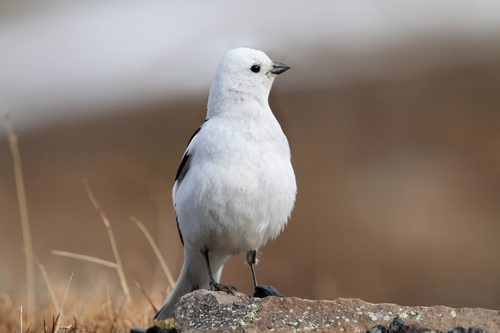
Snow Bunting (Plectrophenax nivalis) Snow Bunting
Yellowhammer (Emberiza citrinella) Yellowhammer

Media

Loading…

In short

The Snow Bunting and Yellowhammer can be distinguished by their plumage and habitat preferences. Snow Buntings have a predominantly white and black plumage, while Yellowhammers are characterized by their bright yellow and brown coloration. Snow Buntings are typically found in open, cold environments, whereas Yellowhammers prefer more temperate, open countryside with hedgerows.

Identification tips

Size

Both species are similar in size, but the Snow Bunting may appear slightly bulkier due to its thicker plumage.

Plumage

Snow Buntings have a striking white and black plumage, especially in males during the breeding season, with white wings and black wingtips. Yellowhammers, on the other hand, are bright yellow with brown streaks, particularly on the head and underparts, making them quite distinct.

Behaviour

Snow Buntings often forage on the ground in flocks, especially in winter, while Yellowhammers are more solitary or found in small groups, often perched on hedgerows or singing from exposed perches.

Habitat

Snow Buntings are found in open, often snowy or tundra-like environments, while Yellowhammers prefer open countryside with hedgerows, fields, and scattered trees.

Voice

Yellowhammers are known for their distinctive song, often described as 'a little bit of bread and no cheese,' whereas Snow Buntings have a softer, more twittering call.

Submit a better description

Use the same sections as the comparison. Your text is published immediately.

The Snow Bunting and Yellowhammer can be distinguished by their plumage and habitat preferences. Snow Buntings have a predominantly white and black plumage, while Yellowhammers are characterized by their bright yellow and brown coloration. Snow Buntings are typically found in open, cold environments, whereas Yellowhammers prefer more temperate, open countryside with hedgerows.

  • Look for white and black plumage in Snow Buntings, especially in males.
  • Note the bright yellow head and underparts of Yellowhammers.
  • Observe habitat: Snow Buntings in open, cold areas; Yellowhammers in temperate fields and hedgerows.
  • Listen for the Yellowhammer's distinctive song.

Both species are similar in size, but the Snow Bunting may appear slightly bulkier due to its thicker plumage.

Snow Buntings have a striking white and black plumage, especially in males during the breeding season, with white wings and black wingtips. Yellowhammers, on the other hand, are bright yellow with brown streaks, particularly on the head and underparts, making them quite distinct.

Snow Buntings often forage on the ground in flocks, especially in winter, while Yellowhammers are more solitary or found in small groups, often perched on hedgerows or singing from exposed perches.

Snow Buntings are found in open, often snowy or tundra-like environments, while Yellowhammers prefer open countryside with hedgerows, fields, and scattered trees.

Yellowhammers are known for their distinctive song, often described as 'a little bit of bread and no cheese,' whereas Snow Buntings have a softer, more twittering call.

Discard your changes?

You have unsaved edits. If you leave now, those changes will be lost.

Snow Bunting · Yellowhammer · My Tricky Birds