Birdr

Snow Goose vs Canada Jay

Anser caerulescens versus Perisoreus canadensis

Play a quiz with Snow Goose and Canada Jay
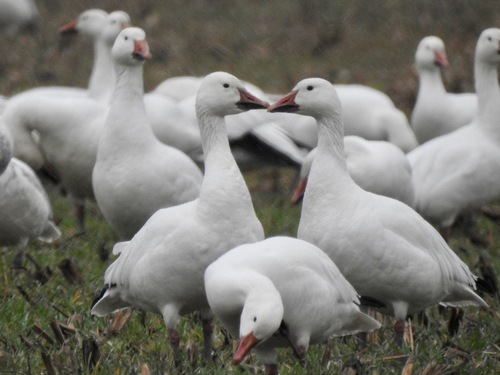
Snow Goose (Anser caerulescens) Snow Goose
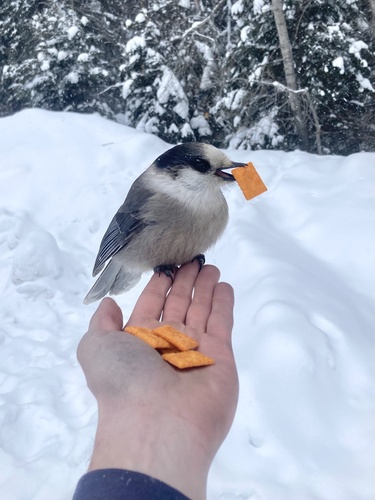
Canada Jay (Perisoreus canadensis) Canada Jay

Media

Loading…

In short

The Snow Goose and Canada Jay are easily distinguished by their size and habitat preferences. Snow Geese are large waterfowl with variable plumage, while Canada Jays are smaller, grayish birds found in forested areas. Observing the environment and size will quickly differentiate these species.

Identification tips

1. Size and Shape: Snow Goose is much larger and bulkier than Canada Jay. 2. Habitat: Snow Goose in open areas vs. Canada Jay in forests. 3. Plumage: Look for white or blue morph in Snow Goose; Canada Jay is gray with a lighter face. 4. Behavior: Snow Goose in flocks; Canada Jay often in small groups. 5. Vocalization: Listen for loud honks of Snow Goose versus the softer calls of Canada Jay.

Size

Snow Goose is significantly larger, with a wingspan of up to 165 cm, compared to the much smaller Canada Jay, which has a wingspan of about 45 cm.

Plumage

Snow Goose can be either white or blue morph; the white morph has a mostly white body with black wingtips, while the blue morph has a dark body with a white head. Canada Jay is uniformly gray with a lighter face and throat, lacking the stark contrast seen in Snow Geese.

Behaviour

Snow Geese are often seen in large flocks, especially during migration and on wintering grounds. Canada Jays are more solitary or found in small family groups and are known for their curious and bold behavior.

Habitat

Snow Geese are typically found in open wetlands, fields, and coastal areas. In contrast, Canada Jays inhabit boreal and montane forests, often in more wooded environments.

Voice

Snow Geese have a loud, honking call, often heard in large flocks. Canada Jays have a variety of softer calls, including whistles and chatters, that are less conspicuous than the Snow Goose's calls.

Submit a better description

Use the same sections as the comparison. Your text is published immediately.

The Snow Goose and Canada Jay are easily distinguished by their size and habitat preferences. Snow Geese are large waterfowl with variable plumage, while Canada Jays are smaller, grayish birds found in forested areas. Observing the environment and size will quickly differentiate these species.

1. Size and Shape: Snow Goose is much larger and bulkier than Canada Jay. 2. Habitat: Snow Goose in open areas vs. Canada Jay in forests. 3. Plumage: Look for white or blue morph in Snow Goose; Canada Jay is gray with a lighter face. 4. Behavior: Snow Goose in flocks; Canada Jay often in small groups. 5. Vocalization: Listen for loud honks of Snow Goose versus the softer calls of Canada Jay.

Snow Goose is significantly larger, with a wingspan of up to 165 cm, compared to the much smaller Canada Jay, which has a wingspan of about 45 cm.

Snow Goose can be either white or blue morph; the white morph has a mostly white body with black wingtips, while the blue morph has a dark body with a white head. Canada Jay is uniformly gray with a lighter face and throat, lacking the stark contrast seen in Snow Geese.

Snow Geese are often seen in large flocks, especially during migration and on wintering grounds. Canada Jays are more solitary or found in small family groups and are known for their curious and bold behavior.

Snow Geese are typically found in open wetlands, fields, and coastal areas. In contrast, Canada Jays inhabit boreal and montane forests, often in more wooded environments.

Snow Geese have a loud, honking call, often heard in large flocks. Canada Jays have a variety of softer calls, including whistles and chatters, that are less conspicuous than the Snow Goose's calls.

Discard your changes?

You have unsaved edits. If you leave now, those changes will be lost.

Snow Goose · Canada Jay · My Tricky Birds