Birdr

Socotra Cisticola vs Desert Cisticola

Cisticola haesitatus versus Cisticola aridulus

Play a quiz with Socotra Cisticola and Desert Cisticola
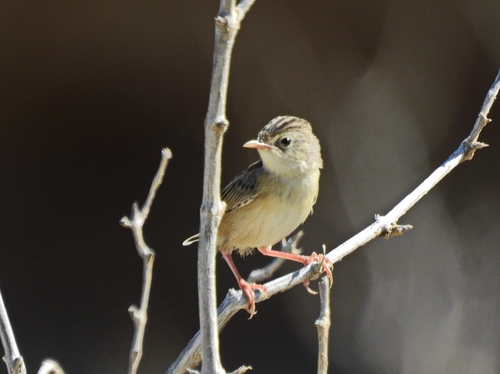
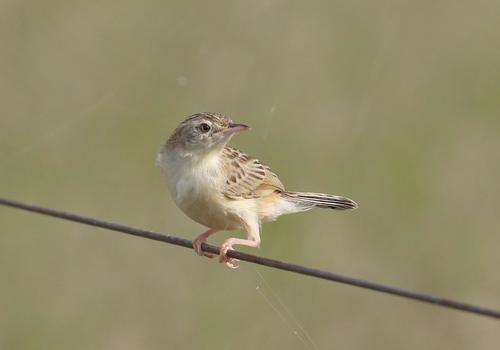
Socotra Cisticola (Cisticola haesitatus) Socotra Cisticola
Desert Cisticola (Cisticola aridulus) Desert Cisticola

Media

Loading…

In short

The Socotra Cisticola and Desert Cisticola are similar in appearance but can be distinguished by their habitat preferences and subtle differences in plumage and vocalizations. The Socotra Cisticola is endemic to Socotra Island, while the Desert Cisticola is found in arid regions across Africa. Observing their behavior and listening to their calls can aid in identification.

Identification tips

  1. Location: Check if you are on Socotra Island (Socotra Cisticola) or in mainland Africa (Desert Cisticola). 2. Plumage: Look for the slightly darker and more uniform plumage of the Socotra Cisticola. 3. Vocalizations: Listen for the distinctive song of the Socotra Cisticola compared to the varied song of the Desert Cisticola. 4. Habitat: Note the habitat type; Socotra Cisticola prefers grasslands and scrub, while Desert Cisticola is found in open, arid regions.

Size

Both species are small, similar-sized cisticolas, making size an unreliable differentiator.

Plumage

The Socotra Cisticola typically has a more uniform and slightly darker plumage compared to the Desert Cisticola, which may appear paler and more streaked. However, these differences can be subtle and vary with lighting.

Behaviour

Both species exhibit similar behavior, such as skulking in low vegetation and making short flights. Observing their specific movements may not provide clear differentiation.

Habitat

Socotra Cisticola is restricted to Socotra Island, often found in grasslands and scrubby areas. In contrast, the Desert Cisticola inhabits a variety of arid and semi-arid regions across Africa, often in open grasslands and savannas.

Voice

The Socotra Cisticola has a distinctive song that differs from the Desert Cisticola, which has a more varied and complex song. Listening for these differences can be crucial in identification.

Submit a better description

Use the same sections as the comparison. Your text is published immediately.

The Socotra Cisticola and Desert Cisticola are similar in appearance but can be distinguished by their habitat preferences and subtle differences in plumage and vocalizations. The Socotra Cisticola is endemic to Socotra Island, while the Desert Cisticola is found in arid regions across Africa. Observing their behavior and listening to their calls can aid in identification.

  1. Location: Check if you are on Socotra Island (Socotra Cisticola) or in mainland Africa (Desert Cisticola). 2. Plumage: Look for the slightly darker and more uniform plumage of the Socotra Cisticola. 3. Vocalizations: Listen for the distinctive song of the Socotra Cisticola compared to the varied song of the Desert Cisticola. 4. Habitat: Note the habitat type; Socotra Cisticola prefers grasslands and scrub, while Desert Cisticola is found in open, arid regions.

Both species are small, similar-sized cisticolas, making size an unreliable differentiator.

The Socotra Cisticola typically has a more uniform and slightly darker plumage compared to the Desert Cisticola, which may appear paler and more streaked. However, these differences can be subtle and vary with lighting.

Both species exhibit similar behavior, such as skulking in low vegetation and making short flights. Observing their specific movements may not provide clear differentiation.

Socotra Cisticola is restricted to Socotra Island, often found in grasslands and scrubby areas. In contrast, the Desert Cisticola inhabits a variety of arid and semi-arid regions across Africa, often in open grasslands and savannas.

The Socotra Cisticola has a distinctive song that differs from the Desert Cisticola, which has a more varied and complex song. Listening for these differences can be crucial in identification.

Discard your changes?

You have unsaved edits. If you leave now, those changes will be lost.

Socotra Cisticola · Desert Cisticola · My Tricky Birds