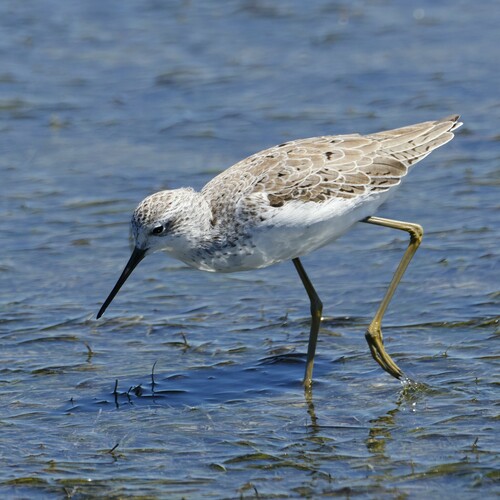
Solitary Sandpiper vs Marsh Sandpiper
Tringa solitaria versus Tringa stagnatilis
Play a quiz with Solitary Sandpiper and Marsh Sandpiper
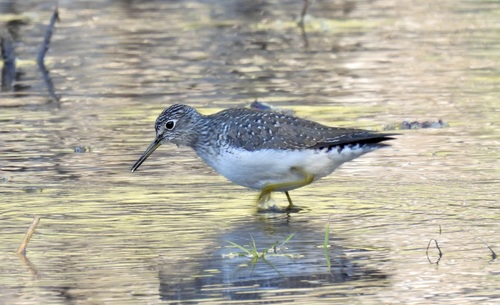
Solitary Sandpiper
Marsh Sandpiper
In short
The Solitary Sandpiper and Marsh Sandpiper are both slender, medium-sized waders, but the Solitary Sandpiper is more robust with a shorter, thicker bill. The Marsh Sandpiper is more delicate with a longer, finer bill and longer legs. Both species can be found in wetland habitats, but their geographical ranges rarely overlap.
Identification tips
- Bill shape: Solitary Sandpiper has a shorter, thicker bill; Marsh Sandpiper has a longer, finer bill.
- Legs: Marsh Sandpiper's legs are longer and more delicate.
- Supercilium: More prominent in Marsh Sandpiper.
- Behavior: Solitary Sandpiper often alone; Marsh Sandpiper in flocks.
- Geography: Solitary Sandpiper in Nearctic; Marsh Sandpiper in Palearctic.
Size
The Solitary Sandpiper is slightly bulkier, while the Marsh Sandpiper is more slender and delicate.
Plumage
Both species have similar mottled brown upperparts, but the Solitary Sandpiper has a more distinct eye-ring and less pronounced supercilium compared to the Marsh Sandpiper's more prominent white supercilium.
Behaviour
The Solitary Sandpiper often appears alone or in small groups, while the Marsh Sandpiper can be seen in larger flocks. The Solitary Sandpiper also exhibits a unique behavior of holding its wings straight up after landing.
Habitat
The Solitary Sandpiper breeds in boreal forests and is often found in freshwater habitats during migration, while the Marsh Sandpiper prefers open wetlands and marshes, primarily in the Old World.
Voice
Vocalizations are not a primary distinguishing feature between these species in the field, but the Solitary Sandpiper's calls are generally less frequent and less varied compared to the Marsh Sandpiper.