Solitary Snipe vs Latham's Snipe
Gallinago solitaria versus Gallinago hardwickii
Play a quiz with Solitary Snipe and Latham's Snipe
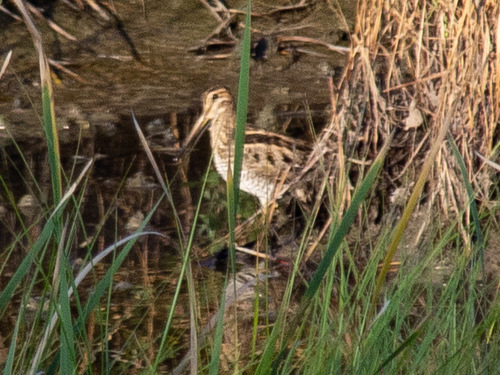
Solitary Snipe
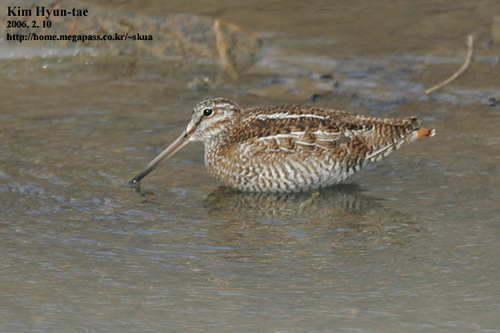
Latham's Snipe
In short
The Solitary Snipe (Gallinago solitaria) and Latham's Snipe (Gallinago hardwickii) are both wading birds that share similar habitats but can be distinguished by differences in size, vocalizations, and plumage coloration. Notably, the Solitary Snipe is generally larger with a more robust build, while Latham's Snipe is smaller and exhibits a distinct coloration and vocal pattern that can aid in identification.
Identification tips
- Birds of the World Similar-Species Diagnostics:
-
The Solitary Snipe is larger and more robust compared to Latham's Snipe, which is smaller and presents a less contrasting plumage. The vocalizations of the Solitary Snipe are deeper and more resonant than the more melodic calls of Latham's Snipe.
-
AI Field Diagnostics:
- When observing these two species in the field, pay special attention to size; the Solitary Snipe will appear noticeably larger and bulkier than the Latham's Snipe.
- Look for plumage differences: the Solitary Snipe has a more pronounced crown and lighter facial markings, while Latham's Snipe exhibits a more uniform coloration with less contrast.
- Behaviorally, if you spot a solitary bird in dense cover, it's likely a Solitary Snipe, while larger groups in open fields are more typical for Latham's Snipe.
- During vocalizations, listen for the deep "peent" of the Solitary Snipe versus the varied whistles of Latham's Snipe, especially during their display flights.
By keeping these distinguishing characteristics in mind, birdwatchers can accurately identify and appreciate the unique traits of these two snipe species.
Size
- Solitary Snipe: The average length ranges from 25 to 30 cm (9.8 to 11.8 inches), with a wingspan of approximately 50 to 55 cm (19.7 to 21.7 inches).
- Latham's Snipe: Smaller in size, measuring about 23 to 26 cm (9.1 to 10.2 inches) in length and has a wingspan of around 45 to 50 cm (17.7 to 19.7 inches).
Plumage
- Solitary Snipe: Characterized by a more robust body with a generally brownish and streaked appearance, featuring a more prominent and contrasting dark crown and a lighter face.
- Latham's Snipe: Displays a more uniform brown coloration with fine streaks and spots; the underparts are slightly paler compared to the upperparts, and the markings are less contrasting.
Behaviour
- Solitary Snipe: Typically seen foraging alone or in small groups, they prefer to stay hidden in dense vegetation. Their flight is low and direct with occasional quick turns.
- Latham's Snipe: Often found in larger groups, especially during migration. They exhibit a more erratic flight pattern with a series of quick beats followed by gliding, and they can be more vocal during flight.
Habitat
- Solitary Snipe: Prefers freshwater marshes, wet grasslands, and areas with dense vegetation for cover, typically found in more remote and undisturbed habitats.
- Latham's Snipe: More adaptable, often found in a variety of wetlands including rice fields, pastures, and shallow inundated areas, frequently seen in more open spaces compared to the Solitary Snipe.
Voice
- Solitary Snipe: Produces a distinctive "peent" sound that is deep and resonant, often heard during the breeding season when males perform their display flights.
- Latham's Snipe: Known for a series of distinctive calls that can include a "churr" or "snipe-like" whistle, often more melodic compared to the Solitary Snipe’s calls.