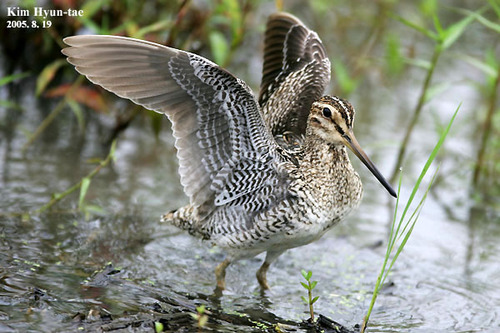
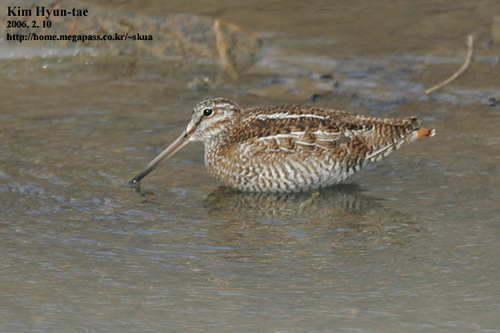
Solitary Snipe vs Pin-tailed Snipe
Gallinago solitaria versus Gallinago stenura
Play a quiz with Solitary Snipe and Pin-tailed Snipe
Solitary Snipe
Pin-tailed Snipe
In short
The Solitary Snipe and Pin-tailed Snipe are both cryptic, ground-dwelling birds often found in similar habitats, making them challenging to distinguish. The most reliable field mark is the tail shape: Solitary Snipe has a more rounded tail, while Pin-tailed Snipe has a distinctly pointed tail. Observing the tail in flight or during display is crucial for identification.
Identification tips
1. Tail shape: Look for the rounded tail of the Solitary Snipe versus the pointed tail of the Pin-tailed Snipe, especially in flight. 2. Habitat context: Consider the elevation and type of wetland; Solitary Snipes are more likely in montane areas. 3. Behavior: Note any solitary behavior, which may suggest Solitary Snipe, but be cautious as this is not definitive.
Size
Both species are similar in size, typical of medium-sized snipes, making size an unreliable distinguishing feature.
Plumage
Both species have cryptic brown plumage with intricate patterns, but the Solitary Snipe may appear slightly darker overall. However, plumage coloration is not a reliable differentiator due to variability and overlap.
Behaviour
Both species exhibit similar behavior, often skulking in dense vegetation and flushing only when closely approached. Solitary Snipes may be more solitary, as their name suggests, but this is not a definitive field mark.
Habitat
Both species inhabit wet, marshy areas, but the Solitary Snipe is more often found in montane regions, while the Pin-tailed Snipe can be found in a wider range of wetland habitats.
Voice
Vocalizations are not well-documented for these species in the field, and they are generally silent outside the breeding season. Any differences in calls are subtle and not reliable for field identification.