Birdr

Solitary Snipe vs Wood Snipe

Gallinago solitaria versus Gallinago nemoricola

Play a quiz with Solitary Snipe and Wood Snipe
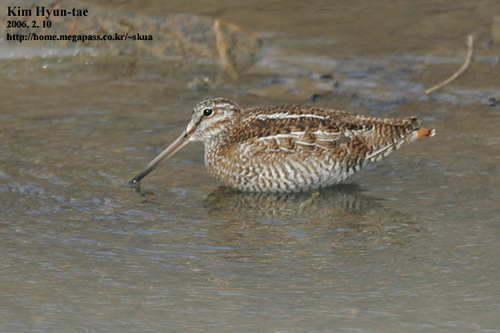
Solitary Snipe (Gallinago solitaria) Solitary Snipe
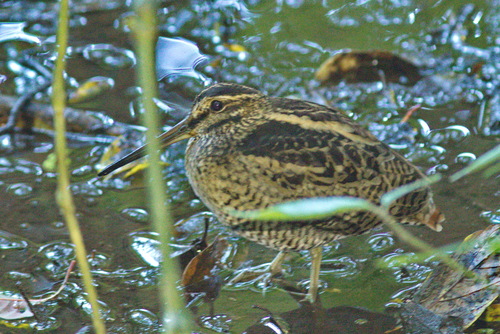
Wood Snipe (Gallinago nemoricola) Wood Snipe

Media

Loading…

In short

The Solitary Snipe and Wood Snipe are both elusive waders with cryptic plumage, but can be distinguished by their habitat preferences and subtle structural differences. Solitary Snipes are typically found in higher elevations and more open habitats, while Wood Snipes prefer dense forested areas. Observing their behavior and listening for vocalizations can also aid in identification.

Identification tips

  1. Habitat: Check the surrounding environment; Solitary Snipes prefer open, high-altitude areas, while Wood Snipes are in dense forests. 2. Plumage Tone: Look for slightly paler tones in Solitary Snipes. 3. Behavior: Note if the bird is solitary and in the open (Solitary Snipe) or secretive and in cover (Wood Snipe). 4. Vocalizations: Listen for calls; Wood Snipes may vocalize more frequently.

Size

Both species are similar in size, typical of snipes, with no significant size difference noted.

Plumage

Both have cryptic brown plumage with intricate patterns, but the Solitary Snipe may appear slightly paler overall. The Wood Snipe tends to have a more uniform dark appearance.

Behaviour

Solitary Snipes are more likely to be seen in open areas, often alone, while Wood Snipes are more secretive, staying within dense cover.

Habitat

Solitary Snipes are found in higher altitude open areas, such as alpine meadows and tundra. In contrast, Wood Snipes prefer dense, moist forests, often at lower elevations.

Voice

Vocalizations are not well-documented for either species, but Solitary Snipes are generally quieter, with occasional soft calls. Wood Snipes may have more frequent vocalizations, especially during the breeding season.

Submit a better description

Use the same sections as the comparison. Your text is published immediately.

The Solitary Snipe and Wood Snipe are both elusive waders with cryptic plumage, but can be distinguished by their habitat preferences and subtle structural differences. Solitary Snipes are typically found in higher elevations and more open habitats, while Wood Snipes prefer dense forested areas. Observing their behavior and listening for vocalizations can also aid in identification.

  1. Habitat: Check the surrounding environment; Solitary Snipes prefer open, high-altitude areas, while Wood Snipes are in dense forests. 2. Plumage Tone: Look for slightly paler tones in Solitary Snipes. 3. Behavior: Note if the bird is solitary and in the open (Solitary Snipe) or secretive and in cover (Wood Snipe). 4. Vocalizations: Listen for calls; Wood Snipes may vocalize more frequently.

Both species are similar in size, typical of snipes, with no significant size difference noted.

Both have cryptic brown plumage with intricate patterns, but the Solitary Snipe may appear slightly paler overall. The Wood Snipe tends to have a more uniform dark appearance.

Solitary Snipes are more likely to be seen in open areas, often alone, while Wood Snipes are more secretive, staying within dense cover.

Solitary Snipes are found in higher altitude open areas, such as alpine meadows and tundra. In contrast, Wood Snipes prefer dense, moist forests, often at lower elevations.

Vocalizations are not well-documented for either species, but Solitary Snipes are generally quieter, with occasional soft calls. Wood Snipes may have more frequent vocalizations, especially during the breeding season.

Discard your changes?

You have unsaved edits. If you leave now, those changes will be lost.

Solitary Snipe · Wood Snipe · My Tricky Birds