Birdr

Somali Bee-eater vs White-throated Bee-eater

Merops revoilii versus Merops albicollis

Play a quiz with Somali Bee-eater and White-throated Bee-eater
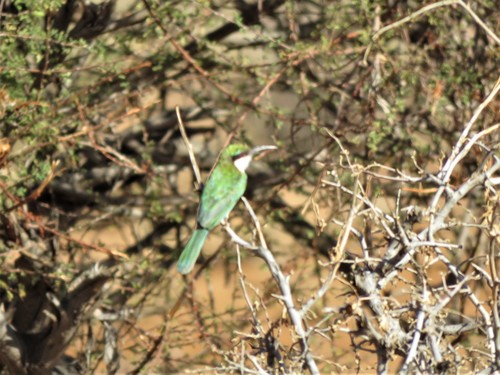
Somali Bee-eater (Merops revoilii) Somali Bee-eater
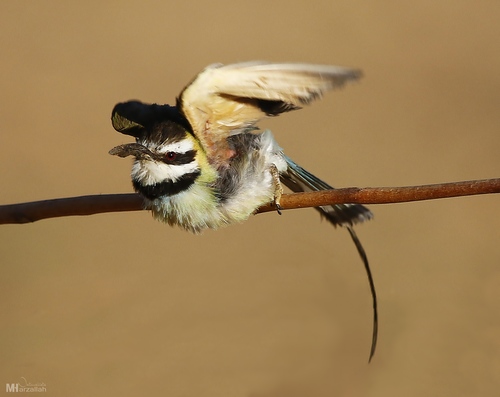
White-throated Bee-eater (Merops albicollis) White-throated Bee-eater

Media

Loading…

In short

The Somali Bee-eater and White-throated Bee-eater can be distinguished by their throat coloration and tail structure. The Somali Bee-eater has a distinctive rufous throat, while the White-throated Bee-eater sports a white throat and longer tail streamers. Both species are similar in size and overall structure, making throat color and tail length the most reliable field marks.

Identification tips

  1. Throat color: Look for the rufous throat of the Somali Bee-eater versus the white throat of the White-throated Bee-eater. 2. Tail streamers: The White-throated Bee-eater has longer tail streamers. 3. Habitat: Consider the habitat; Somali Bee-eaters prefer arid areas. 4. Overall plumage: Both have green upperparts and a black eye stripe, so focus on throat and tail.

Size

Both species are similar in size, typical of bee-eaters, with slender bodies and long tails.

Plumage

The Somali Bee-eater has a rufous throat, whereas the White-throated Bee-eater has a white throat. Both have green upperparts and a black eye stripe, but the White-throated Bee-eater's tail streamers are notably longer.

Behaviour

Both species exhibit typical bee-eater behavior, such as aerial insect hunting and perching on exposed branches. No significant behavioral differences are noted.

Habitat

The Somali Bee-eater is more restricted to arid and semi-arid regions, while the White-throated Bee-eater is often found in more varied habitats, including savannas and open woodlands.

Voice

Both species have similar vocalizations, characterized by trilling and chattering calls, making voice an unreliable differentiator.

Submit a better description

Use the same sections as the comparison. Your text is published immediately.

The Somali Bee-eater and White-throated Bee-eater can be distinguished by their throat coloration and tail structure. The Somali Bee-eater has a distinctive rufous throat, while the White-throated Bee-eater sports a white throat and longer tail streamers. Both species are similar in size and overall structure, making throat color and tail length the most reliable field marks.

  1. Throat color: Look for the rufous throat of the Somali Bee-eater versus the white throat of the White-throated Bee-eater. 2. Tail streamers: The White-throated Bee-eater has longer tail streamers. 3. Habitat: Consider the habitat; Somali Bee-eaters prefer arid areas. 4. Overall plumage: Both have green upperparts and a black eye stripe, so focus on throat and tail.

Both species are similar in size, typical of bee-eaters, with slender bodies and long tails.

The Somali Bee-eater has a rufous throat, whereas the White-throated Bee-eater has a white throat. Both have green upperparts and a black eye stripe, but the White-throated Bee-eater's tail streamers are notably longer.

Both species exhibit typical bee-eater behavior, such as aerial insect hunting and perching on exposed branches. No significant behavioral differences are noted.

The Somali Bee-eater is more restricted to arid and semi-arid regions, while the White-throated Bee-eater is often found in more varied habitats, including savannas and open woodlands.

Both species have similar vocalizations, characterized by trilling and chattering calls, making voice an unreliable differentiator.

Discard your changes?

You have unsaved edits. If you leave now, those changes will be lost.

Somali Bee-eater · White-throated Bee-eater · My Tricky Birds