Birdr

Sombre Nightjar vs Nubian Nightjar

Caprimulgus fraenatus versus Caprimulgus nubicus

Play a quiz with Sombre Nightjar and Nubian Nightjar
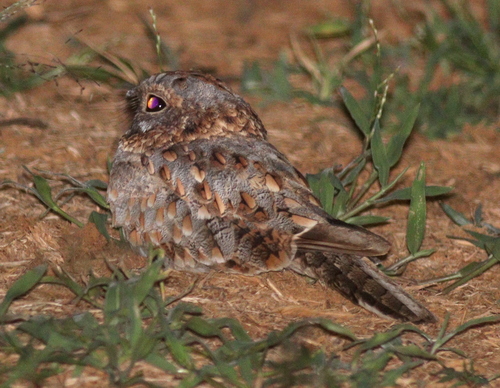
Sombre Nightjar (Caprimulgus fraenatus) Sombre Nightjar
Nubian Nightjar (Caprimulgus nubicus) Nubian Nightjar

Media

Loading…

In short

The Sombre Nightjar and Nubian Nightjar are both nocturnal insectivores, but they can be distinguished by subtle differences in structure and plumage. The Sombre Nightjar tends to have a more uniform dark plumage, while the Nubian Nightjar shows more variation and lighter tones.

Identification tips

Size

Both species are similar in size, typical of medium-sized nightjars.

Plumage

The Sombre Nightjar generally has a darker, more uniform plumage with less contrast, whereas the Nubian Nightjar often shows lighter and more varied plumage, with some subspecies exhibiting distinctive pale markings.

Behaviour

Both species are nocturnal and primarily feed on flying insects. The Nubian Nightjar is known to use torpor on cold nights, a behavior not specifically noted for the Sombre Nightjar.

Habitat

Both species inhabit arid and semi-arid regions, but the Nubian Nightjar is more often associated with sandy and gravelly areas, while the Sombre Nightjar is found in a wider range of habitats including woodlands.

Voice

Vocalizations are not well-documented for these species, but like many nightjars, they likely have distinctive calls used for communication and territory defense.

Submit a better description

Use the same sections as the comparison. Your text is published immediately.

The Sombre Nightjar and Nubian Nightjar are both nocturnal insectivores, but they can be distinguished by subtle differences in structure and plumage. The Sombre Nightjar tends to have a more uniform dark plumage, while the Nubian Nightjar shows more variation and lighter tones.

  • Plumage: Look for the darker, more uniform plumage of the Sombre Nightjar versus the lighter and more varied plumage of the Nubian Nightjar.
  • Habitat: Consider the habitat; Nubian Nightjars are more likely found in sandy areas.
  • Behavior: Note any use of torpor in cold conditions, which is characteristic of the Nubian Nightjar.

Both species are similar in size, typical of medium-sized nightjars.

The Sombre Nightjar generally has a darker, more uniform plumage with less contrast, whereas the Nubian Nightjar often shows lighter and more varied plumage, with some subspecies exhibiting distinctive pale markings.

Both species are nocturnal and primarily feed on flying insects. The Nubian Nightjar is known to use torpor on cold nights, a behavior not specifically noted for the Sombre Nightjar.

Both species inhabit arid and semi-arid regions, but the Nubian Nightjar is more often associated with sandy and gravelly areas, while the Sombre Nightjar is found in a wider range of habitats including woodlands.

Vocalizations are not well-documented for these species, but like many nightjars, they likely have distinctive calls used for communication and territory defense.

Discard your changes?

You have unsaved edits. If you leave now, those changes will be lost.

Sombre Nightjar · Nubian Nightjar · My Tricky Birds