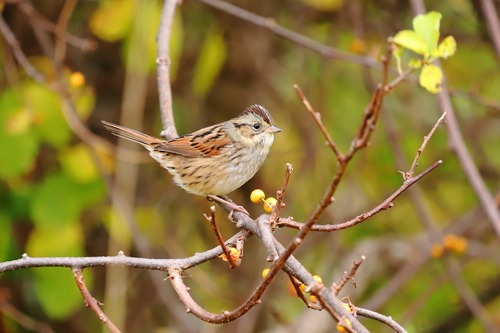
Song Sparrow vs Swamp Sparrow
Melospiza melodia versus Melospiza georgiana
Play a quiz with Song Sparrow and Swamp Sparrow
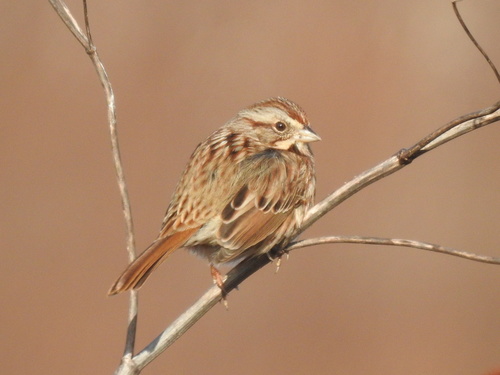
Song Sparrow
Swamp Sparrow
In short
Song Sparrows and Swamp Sparrows can be distinguished by habitat preference and subtle plumage differences. Song Sparrows are more adaptable and often found in a variety of open habitats, while Swamp Sparrows prefer wetland areas. Look for the Song Sparrow's streaked breast and central spot, contrasting with the Swamp Sparrow's cleaner, grayish breast.
Identification tips
- Habitat: Check for wetland presence; Swamp Sparrows prefer these areas. 2. Breast markings: Look for streaks and a central spot on Song Sparrows. 3. Tail and supercilium: Song Sparrows have a broader tail and more pronounced supercilium. 4. Vocalization: Listen for the Song Sparrow's complex song versus the Swamp Sparrow's trill.
Size
Both species are similar in size, but Song Sparrows can appear slightly bulkier due to their more varied subspecies.
Plumage
Song Sparrows have heavily streaked underparts with a central dark spot on the breast, while Swamp Sparrows have a cleaner, grayish breast with less streaking. Song Sparrows also display a more pronounced supercilium and a broader, more rounded tail.
Behaviour
Song Sparrows are more versatile in their behavior, often seen foraging on the ground or in shrubs. Swamp Sparrows are more likely to be seen foraging near water or in dense vegetation.
Habitat
Song Sparrows inhabit a wide range of environments, including gardens, marshes, and forest edges. Swamp Sparrows are more restricted to wetlands, such as marshes and bogs, often near water.
Voice
Song Sparrows have a varied and melodic song, while Swamp Sparrows have a simpler, more monotone trill. Both species' calls can be similar, but the Song Sparrow's song is more complex.