Birdr

Song Thrush vs Fieldfare

Turdus philomelos versus Turdus pilaris

Play a quiz with Song Thrush and Fieldfare
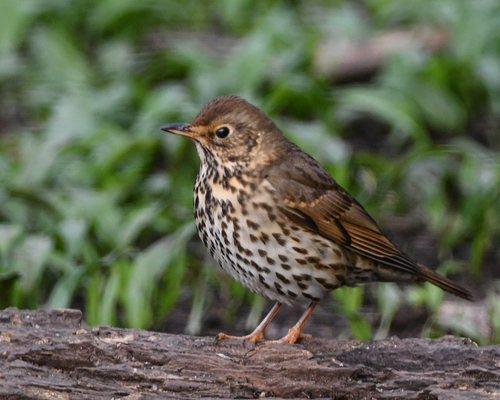
Song Thrush (Turdus philomelos) Song Thrush
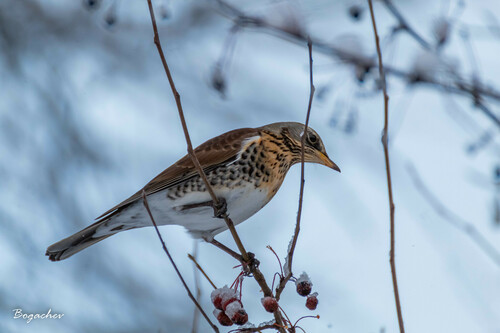
Fieldfare (Turdus pilaris) Fieldfare

Media

Loading…

In short

The Song Thrush and Fieldfare are both medium-sized thrushes, but they can be distinguished by their plumage and behavior. The Song Thrush has a warm brown back and heavily spotted breast, while the Fieldfare has a grey head and rump with a chestnut back. Fieldfares are often seen in flocks, especially in winter, while Song Thrushes are more solitary or in pairs.

Identification tips

  1. Plumage: Look for the grey head and chestnut back of the Fieldfare versus the uniform brown of the Song Thrush. 2. Behavior: Note if the bird is in a flock (likely a Fieldfare) or alone/in pairs (likely a Song Thrush). 3. Habitat: Consider the environment; open fields suggest Fieldfare, while wooded areas suggest Song Thrush. 4. Vocalization: Listen for the Song Thrush's melodious song versus the Fieldfare's harsh calls.

Size

Both species are similar in size, but the Fieldfare is slightly larger and bulkier than the Song Thrush.

Plumage

The Song Thrush has a warm brown back and a cream-colored breast with dense dark spots. In contrast, the Fieldfare has a grey head, nape, and rump, with a chestnut back and a white underwing. The Fieldfare's breast is also spotted but has a more orange hue.

Behaviour

Fieldfares are often seen in large flocks, especially during winter, and are more likely to be found in open fields. Song Thrushes are more solitary or found in pairs and prefer wooded areas or gardens.

Habitat

Song Thrushes are typically found in gardens, woodlands, and parks, while Fieldfares prefer open fields and meadows, especially in winter when they migrate south.

Voice

The Song Thrush is known for its repetitive and melodious song, often sung from a high perch. The Fieldfare's call is a harsh 'chack-chack' sound, and they are less vocal than Song Thrushes.

Submit a better description

Use the same sections as the comparison. Your text is published immediately.

The Song Thrush and Fieldfare are both medium-sized thrushes, but they can be distinguished by their plumage and behavior. The Song Thrush has a warm brown back and heavily spotted breast, while the Fieldfare has a grey head and rump with a chestnut back. Fieldfares are often seen in flocks, especially in winter, while Song Thrushes are more solitary or in pairs.

  1. Plumage: Look for the grey head and chestnut back of the Fieldfare versus the uniform brown of the Song Thrush. 2. Behavior: Note if the bird is in a flock (likely a Fieldfare) or alone/in pairs (likely a Song Thrush). 3. Habitat: Consider the environment; open fields suggest Fieldfare, while wooded areas suggest Song Thrush. 4. Vocalization: Listen for the Song Thrush's melodious song versus the Fieldfare's harsh calls.

Both species are similar in size, but the Fieldfare is slightly larger and bulkier than the Song Thrush.

The Song Thrush has a warm brown back and a cream-colored breast with dense dark spots. In contrast, the Fieldfare has a grey head, nape, and rump, with a chestnut back and a white underwing. The Fieldfare's breast is also spotted but has a more orange hue.

Fieldfares are often seen in large flocks, especially during winter, and are more likely to be found in open fields. Song Thrushes are more solitary or found in pairs and prefer wooded areas or gardens.

Song Thrushes are typically found in gardens, woodlands, and parks, while Fieldfares prefer open fields and meadows, especially in winter when they migrate south.

The Song Thrush is known for its repetitive and melodious song, often sung from a high perch. The Fieldfare's call is a harsh 'chack-chack' sound, and they are less vocal than Song Thrushes.

Discard your changes?

You have unsaved edits. If you leave now, those changes will be lost.

Song Thrush · Fieldfare · My Tricky Birds