Birdr

Song Thrush vs Redwing

Turdus philomelos versus Turdus iliacus

Play a quiz with Song Thrush and Redwing
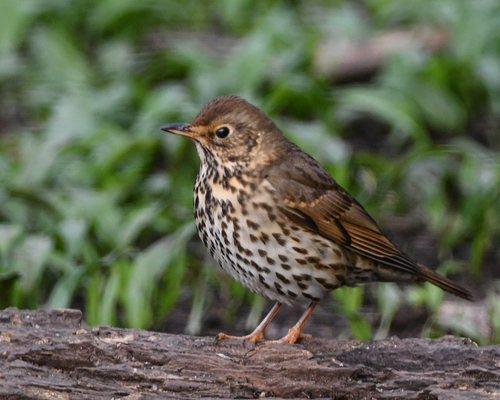
Song Thrush (Turdus philomelos) Song Thrush
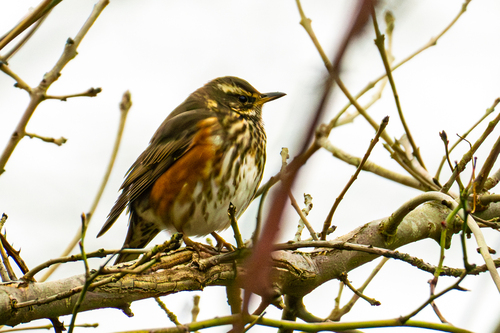
Redwing (Turdus iliacus) Redwing

Media

Loading…

In short

The Song Thrush (Turdus philomelos) and the Redwing (Turdus iliacus) can be distinguished by their size, plumage, vocalizations, and habitat preferences. The Song Thrush is generally larger with a more robust build, while the Redwing is smaller with distinctive red underwing coverts. Additionally, their calls differ significantly, with the Song Thrush having a more melodious song compared to the Redwing's harsher notes.

Identification tips

  1. Birds of the World Similar-Species Diagnostics:
  2. According to Birds of the World, the Song Thrush can be distinguished from the Redwing based on its "robust body" and "dark spots on a lighter underbelly" compared to the Redwing's "bright reddish-orange flanks and underwing coverts" and "prominent buffy-white supercilium."

  3. AI Field Diagnostics:

  4. When identifying these species in the field, pay attention to size; the Song Thrush is noticeably larger and bulkier than the slender Redwing.
  5. Look for the Song Thrush's distinctive dark spotting on its underbelly, which is more pronounced than the Redwing's less pronounced speckling.
  6. Note the color of the underwings; if you see red or orange, you are likely observing a Redwing.
  7. Listen closely to their vocalizations; the melodious song of the Song Thrush is often repeated, whereas the Redwing's call is more abrupt and chattering.
  8. Habitat choice can also aid identification: if you’re in a garden or woodland and hear a beautiful song, it’s likely a Song Thrush; if you’re in open fields or near orchards, the Redwing is more probable.

By focusing on these key characteristics, birdwatchers can effectively distinguish between the Song Thrush and the Redwing, enhancing their birdwatching experience.

Size

Plumage

Behaviour

Habitat

Voice

Submit a better description

Use the same sections as the comparison. Your text is published immediately.

The Song Thrush (Turdus philomelos) and the Redwing (Turdus iliacus) can be distinguished by their size, plumage, vocalizations, and habitat preferences. The Song Thrush is generally larger with a more robust build, while the Redwing is smaller with distinctive red underwing coverts. Additionally, their calls differ significantly, with the Song Thrush having a more melodious song compared to the Redwing's harsher notes.

  1. Birds of the World Similar-Species Diagnostics:
  2. According to Birds of the World, the Song Thrush can be distinguished from the Redwing based on its "robust body" and "dark spots on a lighter underbelly" compared to the Redwing's "bright reddish-orange flanks and underwing coverts" and "prominent buffy-white supercilium."

  3. AI Field Diagnostics:

  4. When identifying these species in the field, pay attention to size; the Song Thrush is noticeably larger and bulkier than the slender Redwing.
  5. Look for the Song Thrush's distinctive dark spotting on its underbelly, which is more pronounced than the Redwing's less pronounced speckling.
  6. Note the color of the underwings; if you see red or orange, you are likely observing a Redwing.
  7. Listen closely to their vocalizations; the melodious song of the Song Thrush is often repeated, whereas the Redwing's call is more abrupt and chattering.
  8. Habitat choice can also aid identification: if you’re in a garden or woodland and hear a beautiful song, it’s likely a Song Thrush; if you’re in open fields or near orchards, the Redwing is more probable.

By focusing on these key characteristics, birdwatchers can effectively distinguish between the Song Thrush and the Redwing, enhancing their birdwatching experience.

  • Song Thrush: Measures approximately 18-23 cm in length with a wingspan of about 32-34 cm. It has a robust body.
  • Redwing: Smaller, measuring about 18-21 cm in length with a wingspan of 30-32 cm. It has a more slender build compared to the Song Thrush.
  • Song Thrush: Exhibits a brown upper body with dark spots on a lighter cream or buff-colored underbelly. The spots are distinctive and more prominent than those of the Redwing.
  • Redwing: Characteristically has a brownish-speckled upper body but is set apart by its bright reddish-orange flanks and underwing coverts, as well as a prominent buffy-white supercilium above the eye.
  • Song Thrush: Known for its melodious singing, often mimicking other birds. It forages actively on the ground, turning over leaves and soil to find food.
  • Redwing: Typically more secretive, foraging in flocks, and often found in open fields or orchards. Its flight is characterized by a rapid, direct style.
  • Song Thrush: Prefers varied habitats, including woodlands, gardens, and hedgerows. It is widely distributed across Europe and parts of Asia.
  • Redwing: Often found in open habitats such as fields and parks during migration. It breeds primarily in moorland and forest edges in northern regions, migrating south for winter.
  • Song Thrush: Recognized for its rich, varied song, often repeating phrases multiple times. Its call is clear and melodic, making it a favorite among birdwatchers.
  • Redwing: Has a simpler, harsher call that sounds more like a chattering or whistling. Its song is less melodious than that of the Song Thrush.

Discard your changes?

You have unsaved edits. If you leave now, those changes will be lost.

Song Thrush · Redwing · My Tricky Birds