Birdr

Sooty Grouse vs Greater Prairie-Chicken

Dendragapus fuliginosus versus Tympanuchus cupido

Play a quiz with Sooty Grouse and Greater Prairie-Chicken
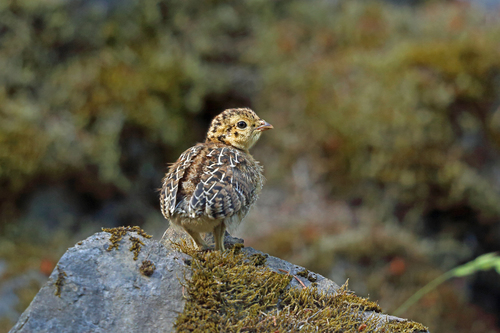
Sooty Grouse (Dendragapus fuliginosus) Sooty Grouse
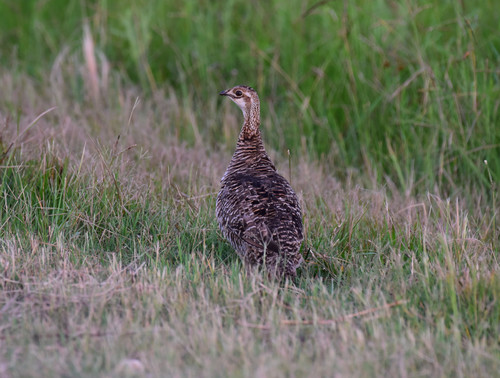
Greater Prairie-Chicken (Tympanuchus cupido) Greater Prairie-Chicken

Media

Loading…

In short

The Sooty Grouse and Greater Prairie-Chicken are both large, ground-dwelling birds, but they differ significantly in habitat preference and plumage. The Sooty Grouse is typically found in coniferous forests, while the Greater Prairie-Chicken inhabits grasslands. Look for differences in tail shape and coloration to distinguish them.

Identification tips

  1. Habitat: Check the surroundings; forests suggest Sooty Grouse, grasslands suggest Greater Prairie-Chicken. 2. Tail Shape: Sooty Grouse has a rounded tail, Greater Prairie-Chicken has a squared tail. 3. Plumage: Look for the barred pattern in Greater Prairie-Chicken. 4. Behavior: Note if the bird is in a group displaying on a lek (Greater Prairie-Chicken) or solitary (Sooty Grouse).

Size

Both species are similar in size, being large grouse, but the Greater Prairie-Chicken is slightly bulkier.

Plumage

Sooty Grouse has a darker, more uniform grayish-brown plumage with a distinctive, rounded tail. The Greater Prairie-Chicken features barred brown and white plumage with a more squared tail and prominent orange eye combs during display.

Behaviour

Sooty Grouse are more solitary and often found in trees, while Greater Prairie-Chickens are known for their communal lekking behavior during breeding season.

Habitat

Sooty Grouse inhabit coniferous forests, often at higher elevations, whereas Greater Prairie-Chickens prefer open grasslands and prairies.

Voice

Sooty Grouse males produce deep hooting sounds, often from trees, while Greater Prairie-Chickens have a distinctive booming call during lek displays.

Submit a better description

Use the same sections as the comparison. Your text is published immediately.

The Sooty Grouse and Greater Prairie-Chicken are both large, ground-dwelling birds, but they differ significantly in habitat preference and plumage. The Sooty Grouse is typically found in coniferous forests, while the Greater Prairie-Chicken inhabits grasslands. Look for differences in tail shape and coloration to distinguish them.

  1. Habitat: Check the surroundings; forests suggest Sooty Grouse, grasslands suggest Greater Prairie-Chicken. 2. Tail Shape: Sooty Grouse has a rounded tail, Greater Prairie-Chicken has a squared tail. 3. Plumage: Look for the barred pattern in Greater Prairie-Chicken. 4. Behavior: Note if the bird is in a group displaying on a lek (Greater Prairie-Chicken) or solitary (Sooty Grouse).

Both species are similar in size, being large grouse, but the Greater Prairie-Chicken is slightly bulkier.

Sooty Grouse has a darker, more uniform grayish-brown plumage with a distinctive, rounded tail. The Greater Prairie-Chicken features barred brown and white plumage with a more squared tail and prominent orange eye combs during display.

Sooty Grouse are more solitary and often found in trees, while Greater Prairie-Chickens are known for their communal lekking behavior during breeding season.

Sooty Grouse inhabit coniferous forests, often at higher elevations, whereas Greater Prairie-Chickens prefer open grasslands and prairies.

Sooty Grouse males produce deep hooting sounds, often from trees, while Greater Prairie-Chickens have a distinctive booming call during lek displays.

Discard your changes?

You have unsaved edits. If you leave now, those changes will be lost.

Sooty Grouse · Greater Prairie-Chicken · My Tricky Birds