Birdr

Sooty Tern vs Grey-backed Tern

Onychoprion fuscatus versus Onychoprion lunatus

Play a quiz with Sooty Tern and Grey-backed Tern
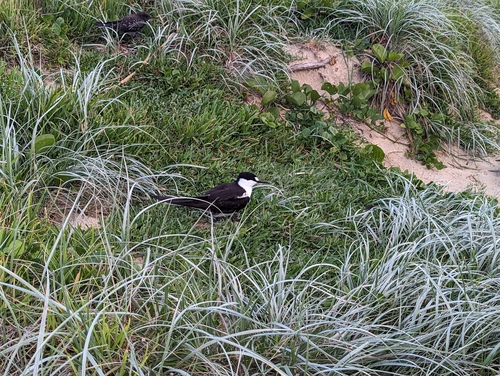
Sooty Tern (Onychoprion fuscatus) Sooty Tern
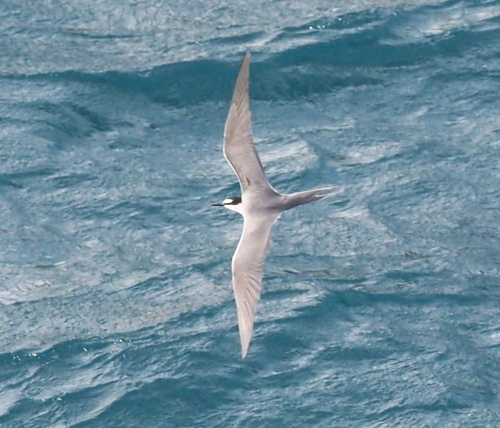
Grey-backed Tern (Onychoprion lunatus) Grey-backed Tern

Media

Loading…

In short

The Sooty Tern and Grey-backed Tern are both tropical seabirds of the genus Onychoprion, often found in overlapping regions. The most reliable field mark is the back color: the Sooty Tern has a uniformly dark back, while the Grey-backed Tern features a distinctive grey back. Both species are similar in size and shape, making plumage the key differentiator.

Identification tips

Size

Both species are similar in size, typical of medium-sized terns, with slender bodies and long wings.

Plumage

The Sooty Tern has a dark blackish back and upperwings, contrasting with its white underparts. In contrast, the Grey-backed Tern has a grey back, which is a key distinguishing feature. Both have white foreheads and underparts, but the Grey-backed Tern's grey back is a standout feature.

Behaviour

Sooty Terns are more gregarious and often seen in large, dense colonies. They are also known to stay airborne for long periods. Grey-backed Terns are shyer and less frequently seen in large groups, often displaced by Sooty Terns in mixed colonies.

Habitat

Sooty Terns are widespread across tropical and subtropical oceans, often nesting on remote islands. Grey-backed Terns are more localized to the central Pacific, particularly around small islands and atolls.

Voice

Both species have similar calls, typical of terns, with no distinct differences noted in the sources.

Submit a better description

Use the same sections as the comparison. Your text is published immediately.

The Sooty Tern and Grey-backed Tern are both tropical seabirds of the genus Onychoprion, often found in overlapping regions. The most reliable field mark is the back color: the Sooty Tern has a uniformly dark back, while the Grey-backed Tern features a distinctive grey back. Both species are similar in size and shape, making plumage the key differentiator.

  • Back color: Look for the grey back of the Grey-backed Tern compared to the dark back of the Sooty Tern.
  • Behavior: Observe flock size and behavior; Sooty Terns are more likely to be in large, dense flocks.
  • Location: Consider the geographic location; Grey-backed Terns are more central Pacific-focused.

Both species are similar in size, typical of medium-sized terns, with slender bodies and long wings.

The Sooty Tern has a dark blackish back and upperwings, contrasting with its white underparts. In contrast, the Grey-backed Tern has a grey back, which is a key distinguishing feature. Both have white foreheads and underparts, but the Grey-backed Tern's grey back is a standout feature.

Sooty Terns are more gregarious and often seen in large, dense colonies. They are also known to stay airborne for long periods. Grey-backed Terns are shyer and less frequently seen in large groups, often displaced by Sooty Terns in mixed colonies.

Sooty Terns are widespread across tropical and subtropical oceans, often nesting on remote islands. Grey-backed Terns are more localized to the central Pacific, particularly around small islands and atolls.

Both species have similar calls, typical of terns, with no distinct differences noted in the sources.

Discard your changes?

You have unsaved edits. If you leave now, those changes will be lost.

Sooty Tern · Grey-backed Tern · My Tricky Birds