Sooty Tern vs Least Tern
Onychoprion fuscatus versus Sternula antillarum
Play a quiz with Sooty Tern and Least Tern
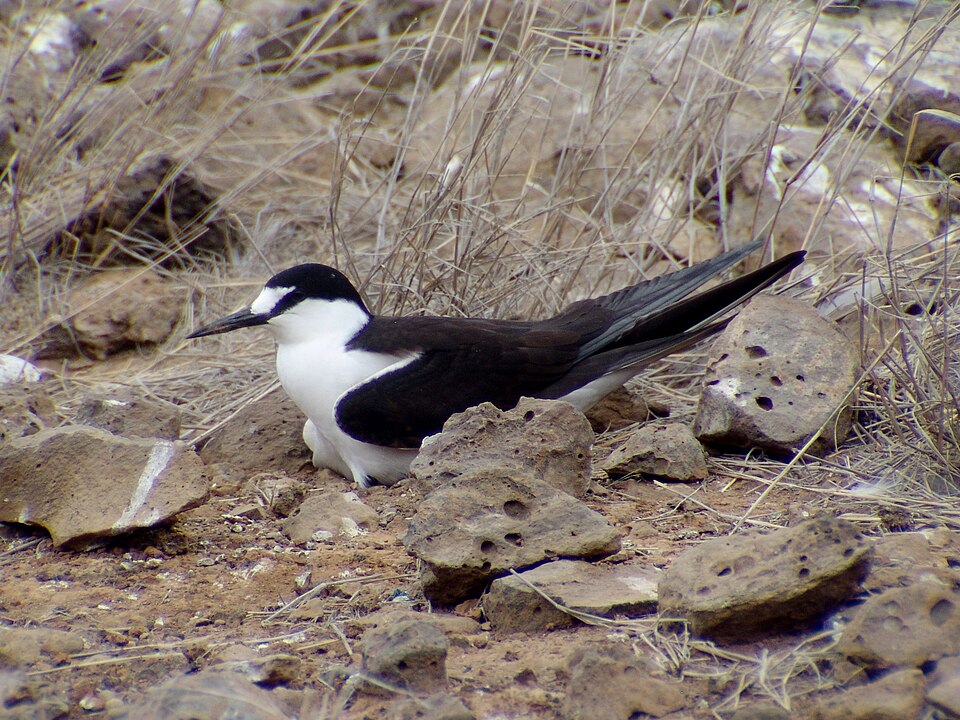 Sooty Tern
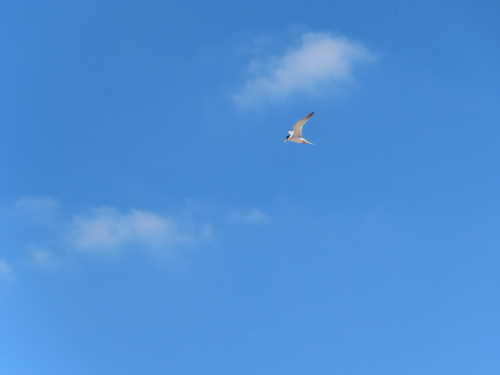 Least Tern
In short
The most reliable field mark is size: Sooty Tern is much larger than Least Tern, with a longer, more deeply forked tail and strikingly dark upperparts, while Least Tern is tiny, pale gray above, and has a short, shallowly forked tail. In flight, Sooty Tern appears long-winged and powerful, with blackish upperparts and a broad white forehead, whereas Least Tern is quick and fluttery, with pale gray wings and a distinctive black-and-white head pattern. Juveniles are also separable: young Sooty Terns are dark and scaly above, while young Least Terns are pale gray above with blackish wing tips. Bill and leg color differ: Sooty Tern has a black bill and legs, Least Tern has yellowish legs and a yellow bill (with a black tip in summer). Habitat and context are strong clues—Sooty Tern is oceanic and rarely seen inland except after storms, while Least Tern is a coastal and estuarine breeder.
Identification tips
- Size is the quickest separator: Sooty Tern is nearly twice the length and wingspan of Least Tern. If you see both together, the difference is unmistakable.
- Juvenile upperparts: Juvenile Sooty Tern is dark gray-black above with narrow pale fringes (scaly look), while juvenile Least Tern is pale gray above with blackish outer primaries and white below. This is a key mark for immatures in flight.
- Adult upperparts: Sooty Tern adults are black to dark brown above; Least Tern adults are pale gray above.
- Forehead pattern: Sooty Tern has a broad white forehead contrasting with a black crown and nape; Least Tern has a small white forehead patch above the bill in summer, which expands in winter, but the black cap is less extensive and less sharply defined than Sooty Tern's.
- Tail shape: Sooty Tern has a moderately deeply forked, black tail with white outer edges; Least Tern has a short, shallowly forked gray tail.
- Bill color: Sooty Tern's bill is always black; Least Tern's bill is yellow with a black tip in summer, becoming all dark in winter. Bill color is a strong mark in breeding season.
- Leg color: Sooty Tern has black legs; Least Tern has yellowish legs.
- Flight style: Sooty Tern flies with strong, direct wingbeats and long, narrow wings; Least Tern is fluttery, with rapid, jerky wingbeats and a hunchbacked posture.
- Wing pattern: Least Tern shows blackish markings on the outer primaries (especially obvious in flight); Sooty Tern's wings are uniformly dark above.
- Underparts: Both are white below, but Sooty Tern's white is more sharply demarcated from the dark upperparts, and juveniles are darker below except for the lower belly.
- Habitat and context: Sooty Tern is oceanic and rarely seen inland or near shore except at breeding colonies or after storms; Least Tern is found on beaches, estuaries, and lagoons, often near people.
- Perched posture: Least Tern often perches on open sand or gravel; Sooty Tern is rarely seen perched except at colonies.
- Voice: Sooty Tern's call is loud, harsh, and raucous; Least Tern's is high-pitched and squeaky. If you hear the call, it is a strong clue.
- Seasonal changes: Least Tern's bill and forehead become darker and whiter, respectively, in winter; Sooty Tern's plumage remains bold and contrasting year-round.
- Pitfalls: Do not confuse Sooty Tern with Least Tern based on 'white forehead' alone—check size, upperpart color, and bill/leg color for confirmation.
Size
Sooty Tern is a medium-large tern, 36–45 cm (14–17.5 in) long with an 82–94 cm (32.5–37 in) wingspan. Least Tern is much smaller, only 22–24 cm (8.7–9.4 in) long with a 50 cm (20 in) wingspan. The size gap is dramatic: Sooty Tern is nearly twice as long and has a much greater wingspan. In direct comparison, Least Tern looks tiny and delicate, with a proportionally shorter tail and smaller head.
Plumage
Juvenile and immature birds are most easily separated by upperpart color and pattern: juvenile Sooty Terns are dark gray-black above with narrow pale fringes, giving a scaly look, and are mostly dark below except for a whitish lower belly. Juvenile Least Terns are pale gray above, with blackish markings on the outer primaries, and white below. Adult Sooty Terns in breeding plumage have black to dark brown upperparts, a broad white forehead, and white underparts, with a moderately deeply forked black tail edged in white. Adult Least Terns are pale gray above, white below, with a black cap, white forehead, and a short, shallowly forked gray tail. In winter, Least Tern's black cap recedes, leaving a more extensive white forehead and a less defined black crown, while Sooty Tern retains its bold dark-and-white contrast. Bill and leg color are also useful: Sooty Tern's are black; Least Tern's are yellowish (bill with a black tip in breeding season, all dark in winter).
Behaviour
Sooty Tern is highly pelagic, spending years at sea, rarely coming to land except to breed, and is almost never seen inland except after storms. Its flight is strong, direct, and powerful, with long, narrow wings and a deeply forked tail. Least Tern is much more coastal, often seen hovering and plunge-diving in shallow estuaries and lagoons. Its flight is fast, fluttery, and often hunchbacked, with rapid, jerky wingbeats and the bill angled downward. Least Tern is more likely to be seen perched on open ground or sandbars, while Sooty Tern is rarely seen perched except at breeding colonies.
Habitat
Sooty Tern is a bird of the open tropical oceans, coming to land only to breed on remote islands, and is almost never found inland except as a storm-blown vagrant. Least Tern breeds on sandy or gravelly beaches, estuaries, and lagoons in North America and northern South America, and forages in shallow coastal waters. If you see a tern inland or on a beach in North America, it is almost certainly not a Sooty Tern. Context is a strong clue: Sooty Tern is oceanic; Least Tern is coastal or estuarine.
Voice
Sooty Tern gives a loud, piercing 'wide-a-wake' or 'ker-wack-a-wack' call, and a harsh alarm 'kvaark.' Least Tern has a higher-pitched, squeaky call, quite different from Sooty Tern's more raucous voice. Calls are distinctive if heard well.